Tag Archives: 80s

Drive-In Double Feature: BEETLEJUICE & THE FRIGHTENERS!

Choosing which two movies I wanted to talk about for my Drive-In Double Feature wasn’t easy. As all the entries this past month have shown, there are endless combinations — none of them wrong, each one utterly singular and wonderfully creative. I had a couple ideas bouncing around (ones I’ll save for next year, or maybe before then) but I finally decided on Beetlejuice and The Frighteners since Beetlejuice — more specifically, its potential sequel — has been in the news lately.
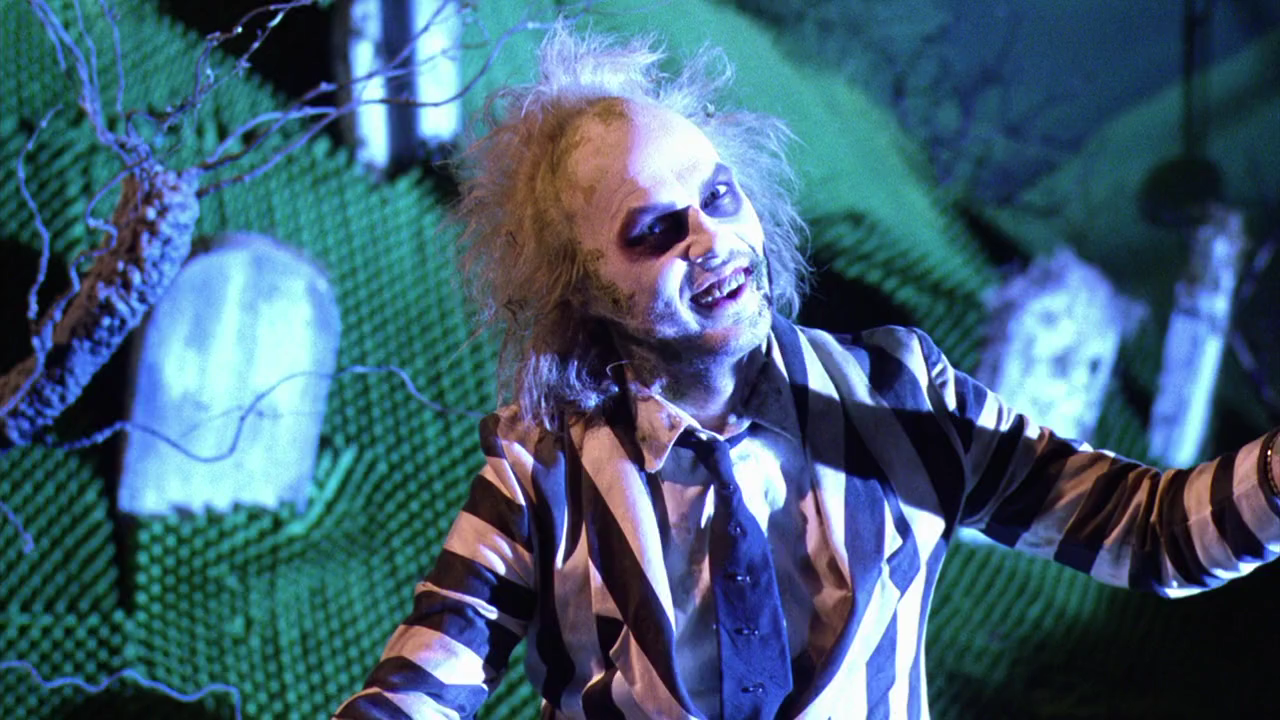
beetlejuice

See, for years now, people have been clamoring for a Beetlejuice sequel — but what they don’t realize is they’ve had a Beetlejuice sequel for years already: The Frighteners. Let’s look at some of the obvious comparisons:

  • Both are about the dead interacting with the living, specifically the dead helping the living accomplish a goal.
  • Both are about a living person using the dead to dupe other living people.
  • Both feature smart-assed ghosts.
  • Both prove that even the dead can still die again.
  • And perhaps most damning of all: both were scored by Danny Elfman! I mean, c’mon people!

The similarities don’t end there.

The catalyst in both films is a car wreck: in Beetlejuice, a car accident kills the Maitlands, which allows them to interact with the dead. In The Frighteners, Michael J. Fox and his wife are also in a car accident; the crash kills the wife, but near-death experience allows Fox to — you guessed it — communicate with the dead.

Plus, look at this car chase from The Frighteners. Everything is very lush and green, hills are winding, homes are painted white and almost look like models. Tell me these locations don’t look exactly like the model set Adam Maitland builds of the little town in Beetlejuice! The car crash at the end of Beetlejuice (the one that takes place on the miniature model) looks identical to the one that happens in The Frighteners. Hell, they even both involve antique model vehicles!

Both also have interesting MPAA ratings: Despite the violence being comical in nature or happening offscreen entirely, The Frighteners was deemed far too violent, and the board forced an R-rating on an unhappy Peter Jackson despite him making as many cuts as he possibly could. Yet Beetlejuice — which features a perverted ghost marrying an underage girl, corpses who talk about suicide, one crotch grab, and one use of “fuck” — snuck by with a harmless PG.

And there is one more loose, tenuous parallel: in The Frighteners, Michael J. Fox lives in an home he never finished building, and it’s in need of major repairs; in Beetlejuice, after the Maitlands die, the Deetzes move in and make major repairs and changes. The homelife in both films, the disarray — it’s too blatant to ignore.

frighteners3

But despite their numerous similarities, the reception to either film couldn’t have been any different. While Beetlejuice became a smash hit and an 80s classic, and probably the most memorable film production for all those involved, The Frighteners failed at the box office and became a mere footnote in Peter Jackson’s filmography. It was also Fox’s last leading role in a live-action feature film. However, in recent years, people seem to be coming to their senses and have now realized what a goddamn gem The Frighteners is, and it has developed, as the cool kids say, a “cult following”.

I remember seeing The Frighteners in the theater with my folks when I was 12 years old. It blew me away. I’ve always been into two things: scary stuff and funny stuff; The Frighteners knocked it out of the goddamned park with both! Aside from just being incredibly fun and well written and beautifully shot, it has tons of incredible special effects. In fact, it required more digital effects shots than almost any movie made up until that time (thanks, Wikipedia!)

BeetleJuice-2

I originally saw Beetlejuice as a small child, most likely from a video store rental. I don’t remember when I saw it I just remember being so young that stuff about the film didn’t make sense to me until years later. Like when the Maitlands drown; I didn’t realize they were dead. When Geena Davis trots the horse statue in front of the mirror to show she has no reflection, I had no goddamned idea what was going on. When the Maitlands possess the Deetzes and force them to dance to calypso music, I couldn’t have been more lost — but damn if that wasn’t a great scene to a toddler!

A double feature of Beetlejuice and The Frighteners makes more sense the longer I sit here and type (also, the more beer I drink.) Beetlejuice is a wonderful ode to the practical effects of 80s horror — even utilizing ‘old-school’ stop motion animation in several scenes. The Frighteners shows the turning of the tide, blending both practical effects and digital effects but leaning more on the latter. Both films would be nominated for and win several Saturn awards. Beetlejuice would even win an Academy Award for best make-up!

Both films also have huge, colorful supporting casts — Beetlejuice with Sylvia Sydney and Dick Cavett; The Frighteners with Dee Wallace, John Astin, and Jeffrey Combs!

maxresdefault

It feels silly summarizing both films, especially Beetlejuice since it has become so embedded in the pop culture collective consciousness — so I’ll skip the summations. But trust me: these movies are the perfect double feature, not simply because they compliment each other, but because one feels like an extension of the other. Go watch both…now!

Drive-In Double Feature: GHOSTBUSTERS & TEEN WOLF!

tbow
My buddy Trent would give even the best nostalgist a run for their money. His interests seems to exist within a small window of time, maybe 1980-1985. Maybe 1978-1987 if I’m being generous. And I don’t blame him: movies, music, hell even quirky foodstuff was more enjoyable then (Ecto-Cooler, anyone?) So it was my hope that Trent would use his knowledge of the arcane to summon a Drive-In Double Feature of childhood favorites, and he did not disappoint.
Drive-in theaters, you may have heard, have become a dying breed. In their 1950s heyday, locations for seeing the latest film (and in a lot of cases, a pair of films) numbered in the tens of thousands, and accounted for one-third of theaters in the United States. Now, we are at about 350 across the country.
I was near one today, and that seemed somewhat remarkable to me. Now when I see a drive-in, I make a mental note of it and try whenever I can to make it there. It’s one of the few vestiges of pure Americana we have left.
So let’s say I pull up to one, and they are showing a double feature in honor of me (maybe I’m dying or I’m the president or something). I get to pick – which two movies would I want to see in the best setting for the viewing of movies that remains?
I looked at this question from dozens of angles and tried to avoid the following conclusion because since I was five or six years old, I have not been able to shut up about –
ghostbusters-image
I’m leading off with what remains, 31 years later, as my favorite film of all time – Ghostbusters. I’ve seen it on televisions, computers, movie screens, tablets, phones, gaming systems, apartment walls. But to see it in the great outdoors at a drive-in movie theater with my fellow Americans? I would be so happy I’d be eligible to be busted before the theme song kicked in.
I cannot say enough good things about this film. The perfect cast, in their prime, with the perfect script working with possibly the greatest film comedian of all-time in Bill Murray.

It’s not only a great, and hilarious film, it is also a marvel to behold and its huge (and occasionally dated) effects lend themselves to a huge and occasionally dated setting. It’s a film to share in the hot and sweaty company of others, and it puts us halfway through the perfect summer night. So go take a whizz and buy another 6 dollar popcorn and settle in for –
Teen Wolf 1985

To show you I’m a reasonable man, I cannot laud Teen Wolf the same way I did the previous film. But I don’t care. It’s an even better movie for an old-school drive-in setting than its predecessor, and it’s a fuckin’ hoot. Ever wonder what would happen if you pretended to surf on top of a moving van while your friend blasts “Surfin’ USA”? Nothing, dude. You’d be fine.
Fresh off of Back to the Future (my runner-up, by the way) Michael J. Fox makes you believe a teen could also be a wolf, and use that quirk to his or her advantage, suddenly excelling at basketball and becoming wildly popular.
Playing the son of a hardware store owner (and fellow wolfperson), Mike Fox crushes it as Scott Howard, a teenager who suddenly realizes an ability to become a wolf almost at will (though sometimes against it), and with the help of his enterprising best friend, Stiles Stilinski, capture the school’s attention and takes his basketball team to dizzying heights.
Typing that out loud it sounds a little crazy, but it is, and that’s the point of drive-ins. You go to escape, because making sense isn’t always fun. You go to be with other people, to let your imagination run wild, to immerse yourself in a world where things work out in the end.
Short of finding this perfect pairing at the drive-in, I will keep searching for the next best thing this summer at my local drive-in, in the dwindling moment where seeing a film outdoors from a car is still a thing that can happen on the planet Earth.
Trent spends most of his free time talking about old episodes of Saturday Night Live, reading Kurt Vonnegut, and hustling little kids at the local arcade with his Tommy-like Ms. Pac-Man skills.

Drive-In Double Feature: THE LAST SLUMBER PARTY & OFFERINGS

ticket

I met Barry when I was in high school. He lived in a town about 45 minutes away from mine. Though we weren’t close, we did share a group of friends so we would occasionally hang out together in a group setting, and sometimes we’d bump into each other at the mall. Eventually, we fell out of touch. Hell, everyone fell out of touch. Flash forward a decade, and somehow through the magic of the Internet we found each other on Facebook and started talking again. I discovered he was a huge gorehound, and his knowledge of the esoteric horrorstuffs put mine to shame. And whenever he’d post pics from his house, it always looked full of great art and good kitschy collectibles. I couldn’t believe it – someone from high school who I didn’t mind reuniting with! We’ve stayed in contact ever since. When I put this thing together I knew Barry had to contribute a piece, and I’m happy to say he did not disappoint. So without further ado, Barry’s Drive-In Double Feature!

There’s a fine line between homage and down right thievery.  The horror genre is notorious for squeezing every last penny out of a good idea and running respectable film franchises into the ground.  Some filmmakers find inspiration in mediocre ideas and expand them into a complex narrative, while other, less creative filmmakers see a good idea and change just enough to avoid a lawsuit.  No film in the horror genre has “inspired” filmmakers more than John Carpenter’s classic, Halloween.  In turn, we can argue that Halloween borrowed many elements from earlier films like Black Christmas and Peeping Tom, but it was Halloween that thrust the slasher genre into the mainstream.  The mold was cast and like an in demand bootleg, the copies of the copies of the copies kept coming.  With each new copy, the films got progressively worse.  This ultimately killed the slasher genre as audiences grew tired of the regurgitated plots and uninspired characters.  By the late 80’s/early 90’s, the slasher film was dying a slow painful death.  Many of the films released at this time were of the straight-to-video variety and offered little hope that the genre would survive.  While some of the films from this era have become rediscovered classics, many remain in obscurity.  The films I have chosen will NEVER be considered classics but somehow they managed to make a lasting impression on me.

tlsp2co5-500x381

The Last Slumber Party is an underdog of a movie.  For all its faults and shortcomings (trust me, there are many), it’s the type of film that is almost too good to be true, and by that I mean absolutely dreadful.  This 1988 straight-to-video release from director Stephen Tyler (no, not that Steven Tyler) tells the story of a group of girls who throw a slumber party on the first night of summer vacation.  Wouldn’t you know it, a killer dressed as a scalpel-wielding surgeon has escaped from a nearby mental institution and is hacking his way to the party.  From the very beginning, it’s apparent that we are in low budget hell.  The whole film is a glorious catastrophe that would make Ed Wood proud.  The camera angles are awkward, the acting is ridiculous, the heavy metal soundtrack credited to Firstryke is laughable, and the special effects are non-existent, but for some reason all of these elements make me love The Last Slumber Party.

Screen Shot 2015-06-11 at 11.52.00 PM
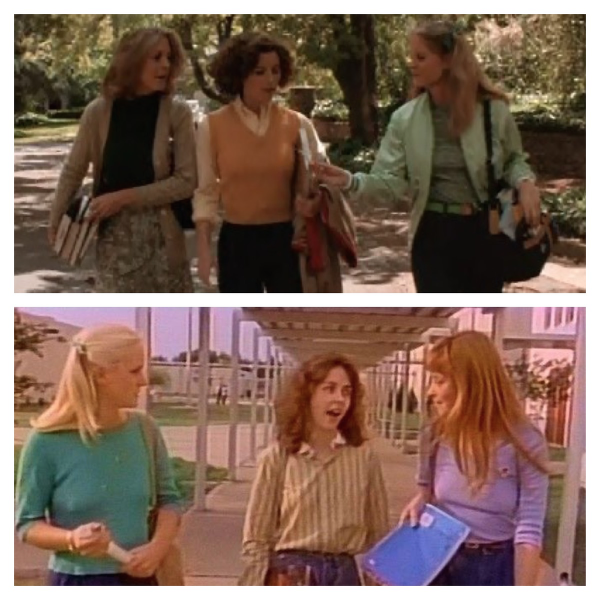
Top, the girls from HALLOWEEN. Bottom, the girls from THE LAST SLUMBER PARTY.

Yes, it’s a shameless rip-off of Halloween and Slumber Party Massacre but you can’t ignore the earnest “let’s make a movie” attitude that Stephen Tyler and his crew must have felt.  They put themselves out there and tried to deliver a kick ass horror film, unfortunately they were 10 years late and $100,000 dollars short.

OFFERINGS-004

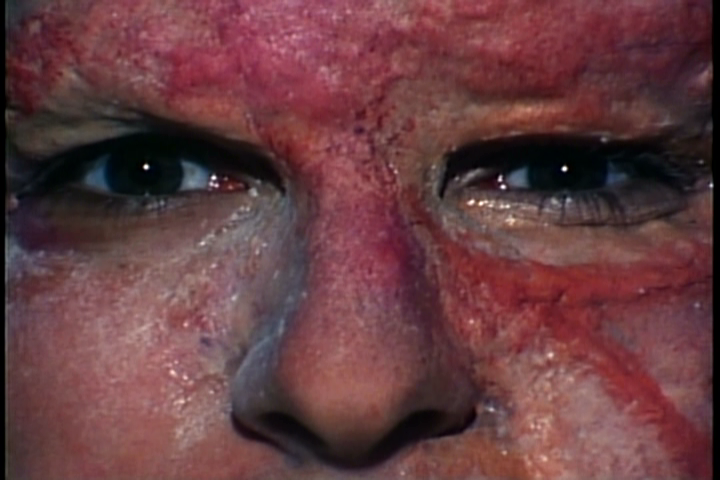
The second film is not much better but must be seen to be believed.  If The Last Slumber Party “borrowed” bits and pieces from other films, then 1989’s Offerings is guilty of highway robbery.  The movie is shameless in its attempt to steal everything it can from Halloween right down to John Carpenter’s iconic theme.  In fact, I was so shocked by how similar it was, that I really wondered why John Carpenter never filed a lawsuit.  Offerings tells the story of mute killer named John Radley who escapes from a mental hospital (he literally walks out the front door and scales a fence) and returns to his hometown to murder a bunch of teenagers.   John Radley has all the characteristics of Michael Meyers; he’s mute, he’s omnipresent, he slowly chases his victims, he turns his head when he is confused, he possesses super human strength, and he lurks in the shadows.   In fact the only thing that sets them apart are their faces.  While Michael sports his Captain Kirk mask, John walks around showing off his disfigured face.  One by one, John kills his childhood tormentors and stalks his old friend Gretchen Peters (who sports an awesome pair of acid washed mom jeans and a wicked Oklahoma accent). Many death scenes resemble the deaths of the characters in Halloween.

Screen Shot 2015-06-11 at 11.53.00 PM
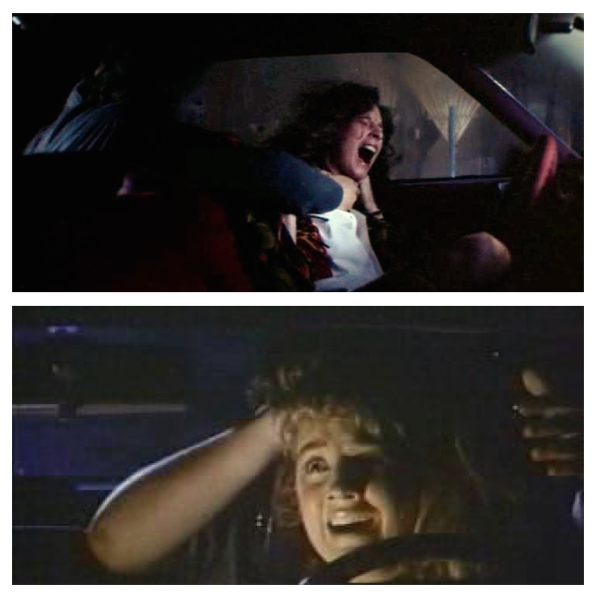
Top, Annie’s car murder in HALLOWEEN. Bottom, a similar car murder from OFFERINGS.

John Radley even has his own Dr. Loomis and Sheriff Bracket that are one step behind his carnage.  Just like Michael Meyers, John Radley steals a headstone, eats a wild animal (a duck instead of a dog), and sleeps in his vacant childhood home.  The only original element to the film is the explanation of the title.  To show is love for Gretchen, John Radley leaves random body parts on her doorstep as offerings.  This is the ONLY original thing in the movie and honestly, it doesn’t make much sense.  The last ten minutes of the film are so similar to Halloween that I really expected Gretchen to ask if he was the boogeyman.  The last line of the movie was so stupid and ridiculous I laughed out loud for 5 minutes.  Trust me, Offerings is the type of movie that should reward you with a badge of honor if you make it to the final credits.

Barry is a horror fanatic and collector of autographs.

“It Follows” (2015) REVIEW

When information about It Follows started traveling down the internet pipeline, and after I’d watched the trailer, two words immediately popped into my head: “Black Hole“.

panel2

From 1995 to 2005, comic artist Charles Burns released a limited run story called Black Hole. Set in the dreary, overcast Pacific Northwest during the mid-70s, Black Hole follows a group of suburban teenagers with nothing better to do than wander the woods, smoke dope, go to the ocean, and screw. It’s well known between the two leads in the story (as well as every other character) that a mysterious sexually transmitted disease (“The Bug”) is being spread among the teens – one that affects each person differently, but still turns them into some sort of freak or mutant. And just like life, some get it worse than others.

Besides being gorgeously illustrated (I hate to use hyper-bowl on ya, but every damn page is absolutely jaw-dropping), the thing that really sells Black Hole is how nauseatingly real and relatable it was – afterall, we all were, at some point, teenagers – and we all had to deal with those awful, shitty teenage feelings. First loves, the pressure of not fitting in, the uncertainty of the future. I’m breaking out in a sweat just typing about it now.

But Burns managed to take this story of teens-turned-freaks and somehow make it a metaphor for teenage life in general and the loss of innocence. Don’t roll your eyes, it’s true! But we’ll get back to Black Hole. Let’s talk about It Follows.

panel1

 I didn’t bother digging up any more information on It Follows than I’d already come across on the internet before seeing it in the theater, because all the reviews were rave and that was enough for me to want to go into it fairly blindly. I wanted to experience it as purely as possible.

The first scene of the film immediately establishes several things: tone, atmosphere, music, and suspense – all of which are enforced throughout its entirety, without ever losing steam or focus. And it’s those components that are so vital in making this film so damn effective and probably why it’s been garnering such high praise.

There’s something strange about It Follows that I can’t even explain, something unsettling. Watching it made me feel something. Set in a suburb of Detroit, the residential streets are wide and bare, the lawns are perfectly manicured, the sidewalks are lined with lush, drooping trees. In a way it very much reminded me of my own teen years, endless days filled with a listless wandering of the streets.

follow1

Perhaps it’s the unconventional way the film is shot – during the ‘golden hour’, lots of shadowy night shots, lots of natural indoor lighting – that make it feel real and therefore inherently more scary.

And it’s all of these things which liken it to its other greatest influence (besides Black Hole): Halloween.

Not since John Carpenter’s 1978 genre-defining classic has the combination of dreary suburbia, droning synths, and a widescreen lens created such a powerful and memorable horror flick. It Follows is filled with tons of wide shots, and this is an important and effective technique: it isolates the subject and makes them look (and feel) small and alone. And again, I can’t stress how important the use of natural lighting (and night shooting, and during the ‘magic hour’) is for the film: when the teens sit around the house, with nothing but the dim glow of lamps and a TV set illuminating the space, a chord is struck deep within your brain.

follow2

When The Guest was released last year, director Adam Wingard described it as, “Terminator meets Halloween.” And while I can appreciate that in a homage-y sense, It Follows actually feels like something John Carpenter filmed sometime in between Halloween and The Fog.

Another thing I really appreciated about this film is the characters. For once, I didn’t want any of them to die! And brother, let me tell you – that is a rare feeling for me when watching a horror flick. Usually I find the characters so damn irritating, that I’d be fine with having ’em all wiped out within the first 10 minutes. They’re usually real dum-dums, and when they’re not screaming at the monster, they’re screaming at each other. But the teens in It Follows feel like a real group of teenaged friends. They feel like real teens. They feel like real friends. And that’s important. Empathizing with the characters, rooting for them – that’s crucial.

At the time of this typing, I watched the film about 10 hours ago, so it still has some settling to do – steeping, marinating, coagulating. But how I’m feeling now is that I really, really enjoyed the film. I’m tellin’ you: there’s something about the way it makes you feel. This film is all about feel. It’s…hard to pinpoint. And that kinda creeps me out.

Overall it’s a refreshing take on a subject that hasn’t been too played out within the genre. I definitely want to see it again – as soon as possible, in fact – and rarely do I feel that driving need to want to rewatch a film immediately. There is a recurring water motif that I haven’t quite deciphered yet, but it’s got me thinking – and when’s the last time a horror movie made me think?

There are a few artistic choices I found silly, if not wholly unnecessary, but they were fleeting and not distracting enough to take me out of the movie. That’s another thing I give It Follows credit for: it rolls along at such a perfect pace, you never have a spare second to worry about what has happened – only what’s going to happen.

Oh, and one more thing about Black Hole ‘fore I wrap this up. At one point Neil Gaiman and Roger Avary were attached to a film adaptation. And after they dropped out, David Fincher was signed on. Eventually director Rupert Sanders produced a short fan film in hopes of actually getting a full length release produced. Unfortunately, nothing ever came of it, but fortunately the short exists on Vimeo, and you can watch it (just click the pic!)

hole

 With its drab and wearisome setting, throbbing synth score, natural indoor lighting, and array of STD-affected teens, I can’t help but wonder if this short wasn’t in some way an influence on It Follows. Or maybe they simply exist within the same creepy, depressing world.

Go see It Follows. And then see it again.

follow

Who’s Walter Paisley?

titleIn 1959, up-and-coming actor Dick Miller starred in the film A Bucket of Blood, an hour-long black and white horror flick set during the beatnik heyday, directed by prolific filmmaker Roger Corman (at that point, Corman had already directed over 20 films in the three short years he’d been making movies); it would prove to be a serendipitous meeting, one that would spawn a character that Miller would end up playing several times over the next 35 years.

blood

In A Bucket of Blood, Miller played ‘Walter Paisley’, a struggling artist who tries desperately to make his mark in the bourgeoning Bohemian art scene. It’s only after ol’ Walt starts killing people and pets alike – and covering them in clay – that he finally gets noticed and starts receiving the attention and accolades he’d wanted for so long. But that was only the beginning for that character. Here’s what Dick Miller recalled about playing Walter Paisley after A Bucket of Blood in a 2012 interview:

“When it first happened, or when it second happened, I didn’t think much of it. [Director Joe Dante] says, “You’re Walter Paisley!” I say, “Again?” He says, “It’s just a name, it’s not the character.” I said, “All right, fine.” I didn’t think about it. And then the third time it came up, he said, “You’re Walter Paisley!” I said, “Oh yeah?” It started to build, it was an inside joke. And by the fourth time he says, “You’re Walter Paisley,” I’m saying, “What is this? Every time there’s no name for the character, I become Walter Paisley.” He says, “So what, it’s an inside joke.”

holly

And so it was. In 1976, Joe Dante – at the time, an unknown assistant to the aforementioned Corman – made his feature film directorial debut with the Corman-produced Hollywood Boulevard. Keeping the camaraderie going, Dante decides to name Miller’s character ‘Walter Paisley’, and with this nod to his boss, Dante would set in motion an in-joke that would pop up in another six films!

howl

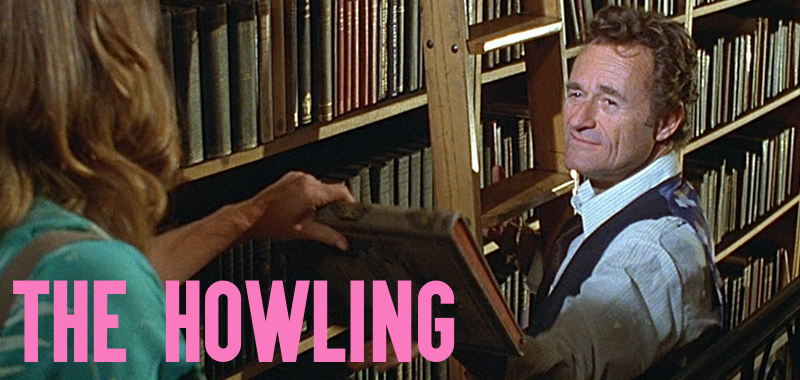
Dante would resurrect the Paisley character in 1981 with his awesome werewolf flick The Howling. In the film, Paisley is the owner of an occult bookshop. His role is a pivotal one: he not only provides the protagonist with all the necessary information on how to stop the werewolves…but also the silver bullets to actually get the job done. Miller claims this is one of his favorite roles. The movie also has cameos from Roger Corman, as well as sci-fi cornerstone Forrest J Ackerman (Miller would later play a character named ‘Mr. Ackerman’ in an episode of ER.)

zone

Once again, under the direction of Joe Dante, ‘Walter Paisley’ makes yet another onscreen appearance – this time in the 1983 classic Twilight Zone: The Movie. It’s a brief appearance, as the Paisley cameos sometimes are. This time, Walter is the proprietor of a little diner. He pops up in the third segment of the film which is entitled, It’s a Good Life. Blink and you could miss him.

mall

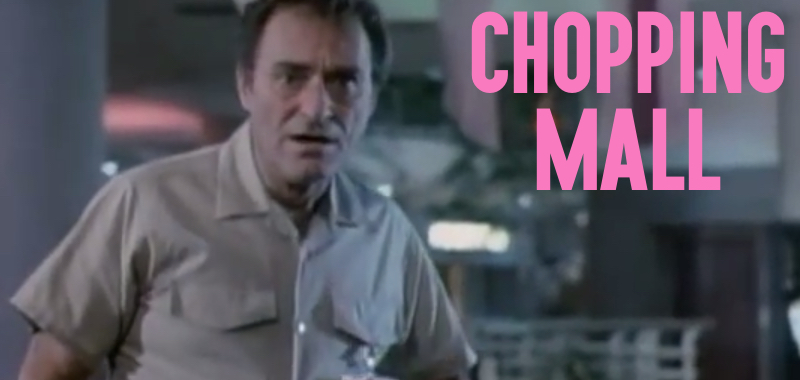
 1986 would prove to be the most active year yet for the character, seeing him show up in two films released just a few months apart. The first was the Corman-produced Chopping Mall from director Jim Wynorski. Walt, a mall janitor, is electrocuted to death by the security robots that are running amok through the shopping center. Paisley isn’t the only fictional character to be carried over from another film to this one. In an odd inclusion, Paul Bartel and Mary Woronov reprise their Eating Raoul characters, ‘Paul & Mary Bland’. The film also stars genre staples Barbara Crampton, Angus Scrimm, and Gerrit Graham.

(Fun Fact: Woronov, Bartel, Graham, Miller, as well as Roger Corman and Joe Dante, had all previously appeared together in the Bartel-directed Cannonball!)

creeps

 Just a couple months after his appearance in Chopping Mall, the Paisley character would pop up again, this time in the Fred Dekker-directed genre bending Night of the Creeps. Paisley is a cop in this film – a role Miller would end up playing in a majority of his movies. Night of the Creeps is intentionally a very referential film, including naming all of the characters after famous horror directors, having Greg Nicotero and Howard Berger play zombies, and even naming the college the kids go to “Corman University”. So it doesn’t seem as though Paisley is there within the Dante/Corman universe, but rather is being paid homage to by Dekker.

rebel

Finally we have Rebel Highway, a short-lived television program set during the 1950s that aired on Showtime back in the mid-90s. Each episode ran about an hour and half long, and they were each directed by a different genre director – Robert Rodriguez, John Milius, and William Friedkin – just to name a few. Walter Paisley popped up – playing a cop – in the sixth episode entitled, “Shake, Rattle and Rock!”, alongside the aforementioned Mary Woronov and Gerrit Graham. Curiously enough, Joe Dante would end up directing an episode of Rebel Highway, and would even include Dick Miller, yet the character was named “Roy Farrell”. Makes ya wonder.

So there you have it. Seven times Dick Miller has played “Walter Paisley”. A Bucket of Blood was remade in 1995, with Anthony Michael Hall taking over the lead role. But we all know there’s only one Walter Paisley: that guy Dick Miller.

Criterion Horror Films!

title

When I think of The Criterion Collection, I think of high art. I think of pristine celluloid and perfectly framed shots sandwiched between thick, black widescreen bars. I think historic, I think epic, I think intelligence. Nose-in-the-air type stuff.

What I don’t think of is ooze, satan-worshipping, hyper-violence or James Woods sticking his hand inside of his own stomach. But believe it or not, all of those things (and more) can be found under the Criterion umbrella! It’s like going over to the class valedictorian’s house and seeing that they have a Basket Case poster on their bedroom wall.

David Lynch, Brian De Palma, Guillermo del Toro, David Fincher, Danny Boyle, and Paul Verhoeven all have Criterion films to their name (and David Cronenberg has four, wow!)

Here’s a short list of some of my favorite Criterion horror flicks. The list is actually much, much longer – and you can find all the titles on the Criterion site as well as their Wikipedia page – but I thought this little list would be a good place to start.

dln

I often preach the greatness of this 1973 Nicolas Roeg shocker. Though not outright labeled as one, it feels like a giallo film – due mainly to the mysterious, raincoat-shrouded character Donald Sutherland hunts around the canals of Italy. Solid flick with plenty of twists and freaky revelations.

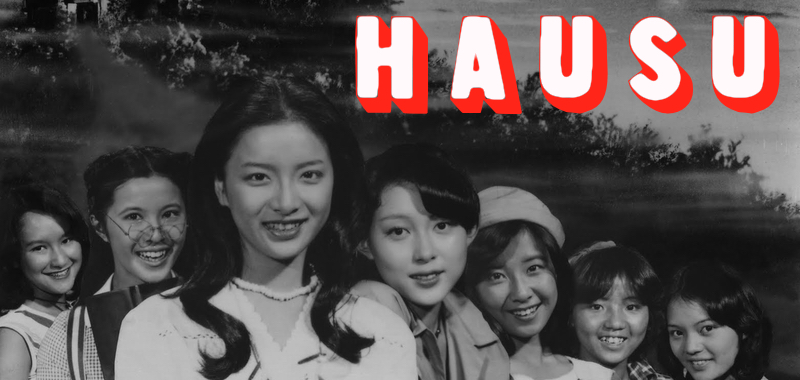
hausu

The first time I saw this film was in a theater packed full of horror fans, and I’m pretty sure I was half in the bag. The main thing I took away from the viewing was how funny the film was – not only by my own drunken interpretation, but also the uproarious laughter from the crowd. The bizarre imagery, the bits of dialogue lost in translation, the goofy score – what a funny, weird film! However, it wasn’t until last year, when I saw the Criterion analysis of the film, that I came to realize how truly horrifying it is. I suggest watching the film without any insight, and then rewatching it after viewing the analysis.

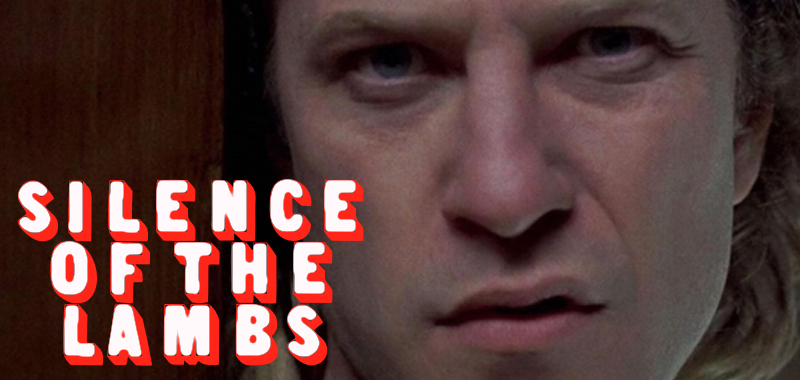
lamb

Pecker-tucking, cannibalism, airborne semen, the c-word, fat jokes, and Tom Petty’s “American Girl”. All in a Criterion movie! This is definitely one of the more understandable entries on this list – after all, Silence of the Lambs did win five Oscars the year it came out. But that just brings up another great milestone: a horror movie sweeping the Academy Awards!

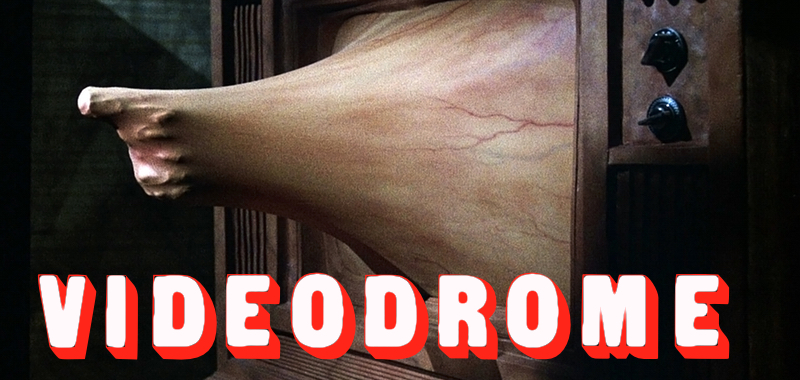
video

As mentioned above, Cronenberg has a staggering four films on the Criterion list. That’s more than Bernardo Bertolucci, Miloš Forman, or Stanley Kubrick! Cronenberg’s other films on the list include Dead Ringers, Naked Lunch, and the amazingly gory Scanners. It’s nice to see body horror, exploding heads, and utter mindfuckery get the kudos it deserves from such a distinguished company.

tom

This film was so controversial when it was released in 1960 that it effectively ruined director Michael Powell’s career. If that’s not enough to get you to watch this movie, I don’t know what to tell you. I love this flick! It is often compared to Psycho, despite beating that film to the theaters by two months. With wide vocal support from both Roger Ebert and Martin Scorsese, this movie is one of the great proto-slashers. At one point, zomfather George A. Romero was rumored to be remaking it, but so far nothing has come of that. Watch it!

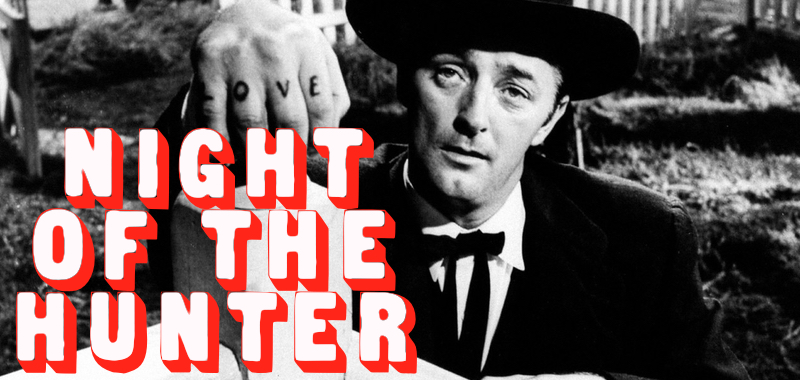
hunter

This is another film that I totally understand its place in the Criterion Collection. It’s beautifully shot in stark black and white, casting ominous shadows over dark secrets like a flawless film noir should. And Robert Mitchum is perfectly terrifying as the murderous con-man trying to swindle a pair of farm kids out of their dead dad’s hidden loot.

baby

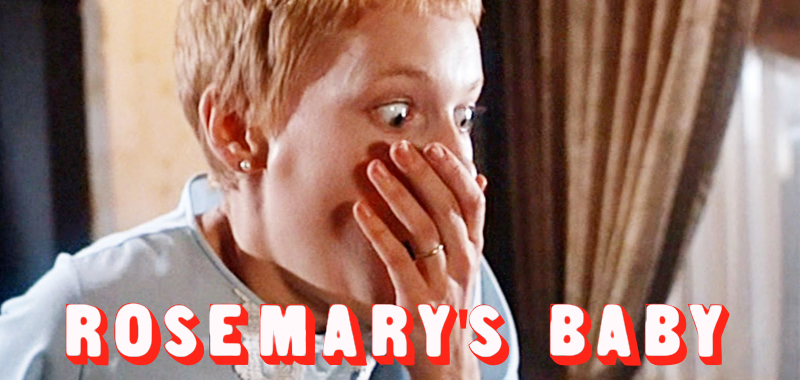
I can understand why waifish middle-class debutante Mia Farrow would be so appalled at discovering she had been incubating Satan in her womb for the past 9 months (spoiler!), but can you imagine if Rosemary had been played by one of those Old Milwaukee-fueled dudines from Heavy Metal Parking Lot? She’d be stoked! As previously mentioned, it’s nice to see devil-worshipping be presented in such a highfalutin way.

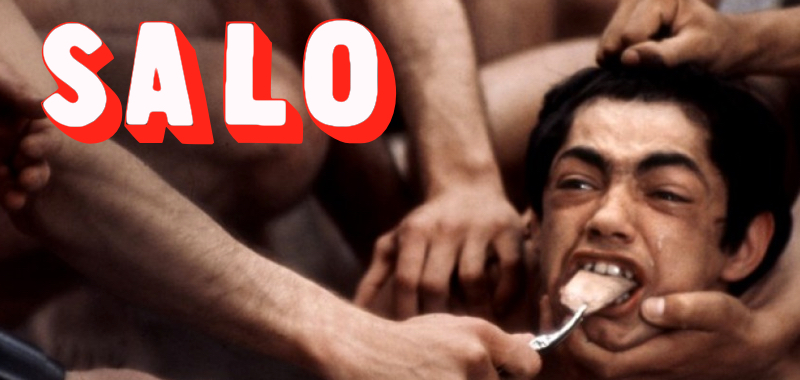
saloBased on the synonymous book by the Maquis de Sade, this movie features all sorts of stuff your grandma would probably frown at: sadism, graphic violence, sexual depravity, and forcing little kids to eat platefuls of boom-boom. So naturally it should wind up in the Criterion Collection, a list self-described as “important classic and contemporary films for film aficionados”. Just what I love: artful smut!

Sure, this list loses some of its oomph when you realize both Kevin Smith and Michael Bay both have films on the Criterion list. Kinda makes you wonder who was behind the wheel when those decisions were made. But look: any collection that features The Blob (1958), Invasion of the Body Snatchers (1956), and Fiend Without a Face, and is intended for only the most discerning of film snobs — that’s a pretty dang alright list in my book.