Category Archives: Articles

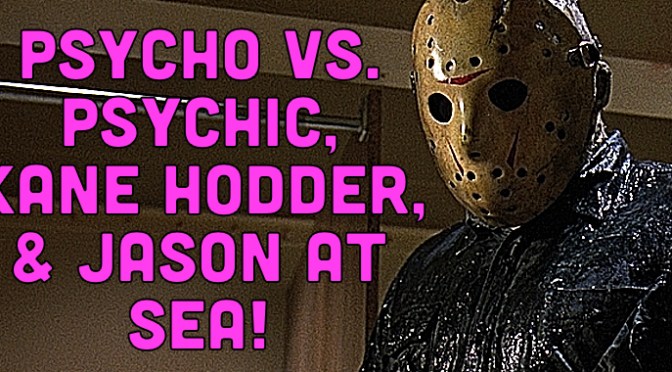
Psycho vs. Psychic, Kane Hodder, & Jason at Sea!

title

I miss being a little kid and watching a horror movie I’d never seen through unjaded eyes. Just turning off my mind, pressing play, and absorbing the wonder.

As an adult now, I sometimes catch myself being clinical and obsessive about non-issues when watching a horror flick…and I hate that. The weird thing is, I only do it when watching a recently released movie I haven’t seen. The older ones, they get a pass. It’s like respecting your elders or somethin’. I haven’t thought long enough on it to explain it better.

That being said, when I was a kid and I saw a zombie Jason facing off against a girl with psychokinetic powers – in a series that was once grounded in some sort of reality – I didn’t even bat an eyelash. Instead, I was like, “This is great!” I mean, it was.

Friday the 13th: Jason Lives was released to little fanfare – the critics actually appreciated its intelligence, but the fans weren’t feeling the meta, self-referential humor that was peppered throughout. That was two strikes in a row for the series (after the abysmal but now cult status Friday the 13th: A New Beginning), so Paramount was pretty much ready to abandon the series. This is where the initial idea of pitting Jason against Freddy Krueger started to be toyed with. But when Paramount and New Line Cinema couldn’t come to an agreement, the project was discarded. In a last ditch effort to revitalize the series, screenwriter Daryl Haney submitted a throw away idea he had: Jason versus a girl with telekinetic powers. The Associate Producer, Barbara Sachs, loved the idea: Carrie versus Jason…That’s an interesting idea.” And so it was. Continue reading Psycho vs. Psychic, Kane Hodder, & Jason at Sea!

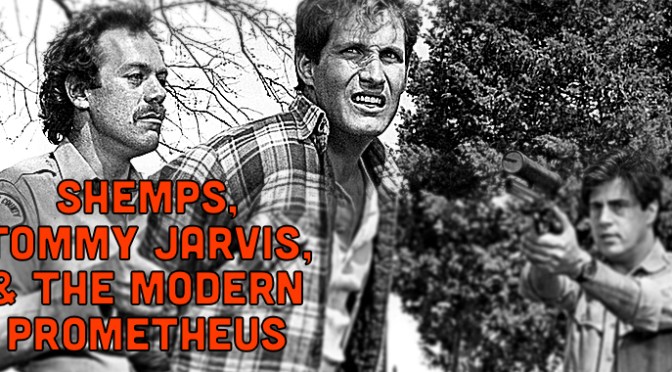
Shemps, Tommy Jarvis, & the Modern Prometheus!

title

Welcome back! I was just about to start talking about the headscratcher that was Friday the 13th: A New Beginning. Hope your nails are trimmed.

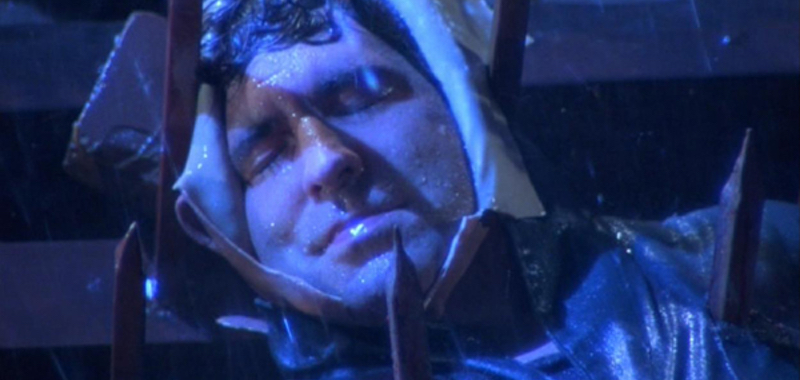
For all intents and purposes, Friday the 13th: The Final Chapter was meant to be the last movie in the series. After all, Jason took a pretty good machete whack to the temple in the third act. Then bald little Tommy Jarvis thought he’d hack away at Jason while he was down until nothing was left but a pile of Hamburger Helper. I mean, it wasn’t subtitled The Final Chapter for no reason. This was it, people! But director Joe Zito, being the good sport that he was, left the film open-ended: as the final bit of music starts to swell, the camera pans in on an emotional Tommy Jarvis hugging his sister Trish – they’re the only survivors. Suddenly, boom, Tommy’s face goes slack and his eyes blast open, and he stares, dead-eyed, into the camera. Into our souls. Does this mean Tommy Jarvis would spiritually inherit the unstoppable urge to kill from Jason Voorhees, the man he’d just murdered?

tommy

Kinda. Not really, though.

See, producers and writers of A New Beginning were convinced that Jason was actually dead, they just needed an idea of where to take the series from there. Certainly, bringing Jason back from the dead was too ludicrous of an idea to even consider. Zombie Jason? That’s just crazy. Perhaps they hadn’t thought about the fact that Jason had apparently drowned as a child and was therefore already…

Anyway, they didn’t think Jason could come back. To be fair, Friday the 13th Part 2, Friday the 13th Part 3, and Friday the 13th: The Final Chapter are all supposed to take place over the same weekend, if you follow the timeline correctly. So there wasn’t anything necessarily other-wordly about Jason at this point. He was just a killer who took some massive abuse during the course of one week, and was finally stopped by Tommy Jarvis.

It’s important to note that at this point, the ‘undead killer’ trope hadn’t become a thing yet. It was 1985: Michael Myers was officially dead in a hospital fire; Leatherface was still a year away from a sequel – as far as anyone knew, he was still dancing and spinning out on some desolate Texas road; Freddy had just made his debut the year before, and his sequel wouldn’t be released until 8 months after A New Beginning. There was no Chucky. No Jigsaw. No Candyman. So in 1985 dead was dead. And Jason? He was dead.

But instead of following the Tommy Jarvis-as-Jason storyline, they decided to do two things:

  • first, revisit that mental hospital script they rejected for Friday the 13th Part 3. Fine, solid idea.
  • The second thing they did, however, left fans with a bad taste in their mouths and caused some of the lowest ticket sales in the series at that point.

So what did they do that was so offensive? They used a fake Jason. Like how The Three Stooges used a fake Shemp to fill in for some of the scenes after the real Shemp died. Not cool, Paramount.

oy

Halloween III: Season of the Witch doesn’t feature Michael Myers, but at least they didn’t have some guy walking around in a white William Shatner mask, only to pull it off in the final act and go, “Ha! I’m not Michael Myers!” – which is exactly what happened in A New Beginning. So you can understand fans feeling a little cheated.

The opening to Halloween: Resurrection (that’s “Part 8” for those keepin’ track) did try a similar stunt: Jamie Lee Curtis thinks she decapitates Michael Myers at the end of the previous film (effectively permanently ending the series), but wait a second! Turns out the real Michael Myers had crushed some poor schmuck’s voicebox and slapped that familiar mask on him instead. So Jamie Lee just ended up killing some random dude. It was an utterly implausible move, even for a series where the bad guy had been shot, stabbed, burned, buried, and somehow still kept coming back for more. I mean, we the audience can only suspend our disbelief so much.

Even A Nightmare on Elm Street 2: Freddy’s Revenge hopped on the ‘surrogate killer’ train, almost immediately – with young protagonist Jesse committing all of the murders, with Freddy only occasionally popping up towards the end of the film.

Hell, now that I’m thinking about it, three of the Friday the 13th films don’t feature Jason as the primary killer: the original, this one, and Jason Goes to Hell! What the hell is going on?!

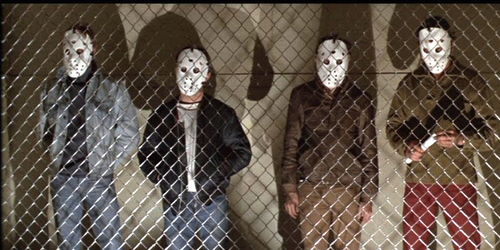
What A New Beginning lacked in a Jason it made up for in sex and violence. The late director Danny Steinmann had gotten his start in porno; apparently the sex and nudity in A New Beginning had to be toned down — but the censors saying your horror film has too much nudity, it’s like telling Willy Wonka his factory has too much chocolate.  And a new precedent had been handed down to Steinmann: there must be a kill every 8 minutes. And it shows. There are random characters popping up out of nowhere, only to be killed off in the same exact scene they first appear. Like two greasers, one of who is dressed like Marlon Brando from The Wild One:

greasers

There’s a lot wrong with the flick – it feels the most unsure of itself and definitely felt like the first time the studio and money providers had interfered too much. But I suppose they did the best the could with the script that had. Who knows, man.

Mark Venturini and Miguel A. Núñez, Jr. appear briefly in the film (Núñez, Jr. has one of the most memorable scenes I’ve ever seen in a horror film; a scene I quote – or sing, rather – still today.) Núñez, Jr. and Venturini would appear together later the same year in the immortal Return of the Living Dead, alongside Thom Matthews who would go on to play Tommy Jarvis in Friday the 13th: Jason Lives. Hey, speaking of!

So the fans weren’t having the fake Jason thing. And the film ended on a similar note as the previous one – Tommy Jarvis could still potentially turn into a Jasonesque killer with the next sequel.

toms

But thankfully, Paramount came to their sense and told Jason Lives director Tom McLoughlin, “Bring back Jason.” Jason Lives would be the first time in the series where Jason was accepted to be a fully resurrected dead guy (aka “zombie”.)

The Halloween series had to change its course due to a similar fan backlash. Viewers flocked to the theater for Halloween III and left asking, “Hey, where was Michael?” And so, with Halloween 4: The Return of Michael Myers, Michael…well, he returned. And he’s been the focal point since.

McLoughlin, in my opinion, was a good choice to revitalize the Friday series. And even though this film was the first one that didn’t break the $20M mark, I still feel his approach brought a freshness and a self-awareness to the series, something it desperately needed.  In fact, Kevin Williamson (writer of Scream) not only admitted Jason Lives was a huge influence on Scream and its style of referential horror humor, but McLoughlin was initially offered to direct the film (Wes Craven would eventually take the position.)

One of the many references the film makes is comparing Jason to the story of “Frankenstein”.

  • Jason is brought to life via lightning rod/electricity (as was Frankenstein’s monster)
  • This was the first (and only) Friday the 13th film to feature children at the camp (and we know how the monster treats little kids [especially little girls who play by the lake])
  • Tommy Jarvis initially tries to burn Jason’s corpse at the start of the film, and again at the end of the film (Frankenstein’s monster hates fire)
  • There is a gas station in the film named “Karloff’s”

There are plenty of other in-jokes and references, and they only add to the film. And A New Beginning may have had its Shemp, but Jason Lives has a triple decapitation that would make Moe Howard proud.

But as mentioned above, despite being an intelligent, fun, revitalizing entry in the series (and actually enjoyed by the critics) the film failed to make an impact on audiences, as is usually the case with films that are ahead of their time (just look at April Fool’s Day.)

McLoughlin was forced to leave the film open-ended, just in case Paramount wanted to bring Jason back for another one. And they would. And they did.

Join me for tomorrow’s article, “Psycho vs. Psychic, Kane Hodder, & Jason at Sea”, which covers both Friday the 13th VII: A New Blood and Friday the 13th VIII: Jason Takes Manhattan!

Hockey Masks, the 3D Boom, & Final Chapters!

title

There was a time, long before CGI (and modern 3D techniques), where placing a piece of red cellophane in front of your left eye and a piece of blue cellophane in front of your right eye was the zenith of stereoscopic technology. And that methodology stuck for over 50 years. Seriously – that was it, man.

I remember being 7 years old and seeing Freddy’s Dead: The Final Nightmare in the theater. The film was released in 3D – well, parts of the film were in 3D – but going into the movie you got these cool little cardboard glasses. Whenever one of the 3D parts was about to happen, there would be a little dialogue at the bottom of the screen that said, “Please put on your glasses now”. I was so afraid that if I wore the glasses during parts that weren’t 3D, I’d damage my eyes, just screw ’em up beyond repair. That was one of the most thrilling moviegoing experiences of my life.

Looking back now, as a jaded adult – sure, the movie kinda stinks. And being excited by that type of technology now would be like freaking out over a flip-book. But at the time, in 1991, it was a goddamn epiphany.

But the early days of 3D film were no treat. In order to pull off the effect, two prints had to be projected simultaneously – and be perfectly in sync. Otherwise, audiences would just see a blurry haze of colors and shapes. Due to its time consuming and cost-ineffective nature, the golden age of 3D films (the 50s and early 60s) was brief.

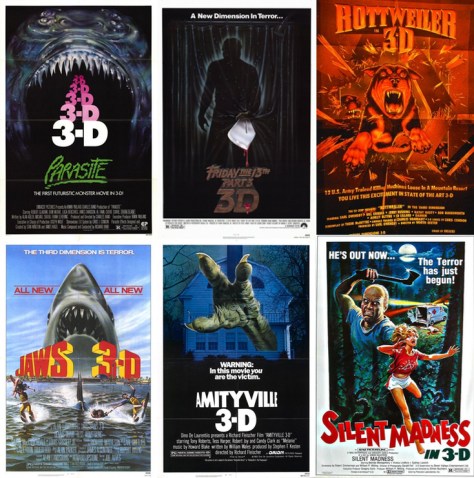
However, come 1981, 3D films became the craze once again. In fact, 20 3D films were released in a 3-year period. And horror took full advantage.
3d-posters

Originally, producers hadn’t planned to do Friday the 13th Part 3 in 3D. Instead, they did what they’d been doing from the beginning and decided to rip-off another film for inspiration, this time Halloween II, which had come out the previous year. The third installment of the Friday series was supposed to take place in a mental hospital, where Ginny – the final girl from Part 2 – was holed up. Jason would hack down any doctors or orderlies that got in his way until the final showdown between he and Ginny. Funny enough, A Nightmare on Elm Street 3: Dream Warriors (which would be released 5 years later), did take place in a mental hospital. I do love the tenuous strings that connect all these films together!

Interestingly, there was initial discussion of filming Halloween II in 3D; (producer Debra) Hill said:

“We investigated a number of 3D processes … but they were far too expensive for this particular project. Also, most of the projects we do involve a lot of night shooting—evil lurks at night. It’s hard to do that in 3D.”

That anecdote is coincidental because, just last year, there was talks of a third installment to the Halloween reboot – and producers wanted to do it in 3D. While news surrounding the sequel has been scant, there’s reason to believe the 3D plans have since been quashed.

But back to Friday the 13th Part 3: once the Friday producers saw how much Comin’ At Ya! – the first 3D film of the 80s – made at the box office, they knew what they had to do.

Friday the 13th Part 3 was apparently a pain to make – blocking, setting up cameras, harsh lighting, multiple takes – all due to the 3D cameras they were using. It also cost a fortune just get into theaters, as Paramount had to pay to equip them with the extra prints and projectors. That one hang-up alone cost an estimated $8 to $10 million extra dollars. Of course, it made all that money back and then some.

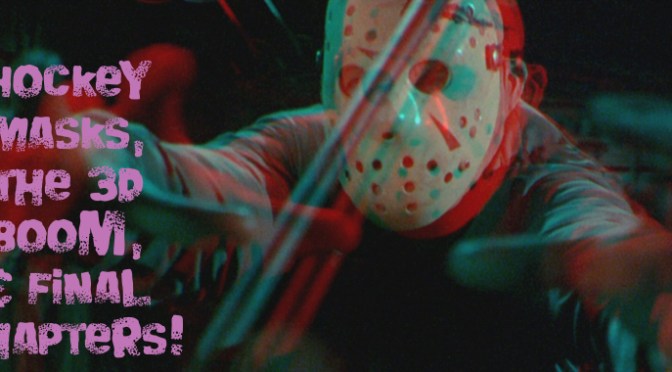
But Friday the 13th Part 3 is historic for reasons other than being filmed in 3D:  it’s the first time Jason wears his iconic hockey mask. 

At the end of Part 2, Jason’s bag (which he wore over his head) had been torn up and was therefore no good. So for the entire first half of Part 3, Jason walks around without a mask.

Enter afro-ed merry prankster Shelly Finklestein (sounds a bit like ‘Mary Shelley’s Frankenstein’, no?). Shelly has at his disposal an endless supply of goofs and gags that he uses to torment his friends with. Things like fake knives, meat cleavers, and scary masks. His friends think he’s a jerk, but as Shelly puts it, “Being a jerk is better than being a nothing.” Oddly, he also has a hockey mask stashed in his bag of pranks. After Shelly is killed, Jason takes the mask – and the look would become synonymous with the name ‘Jason Voorhees’ for the rest of the series.

Now, producers claim their inspiration for Jason’s masked look came from when they were doing make-ups tests: they were lazy and didn’t wanna apply the make-up to the actor playing Jason, so instead just threw a hockey mask on him, and boom, a legend was born. But I call bullstuff.

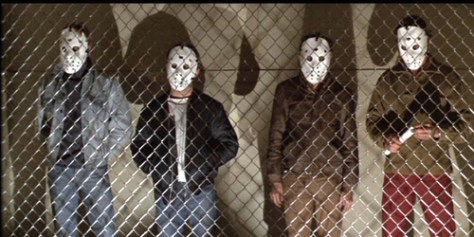
A hockey masked killer would show up twice before Friday the 13th Part 3 – one as early as 1974. That film was Act of Vengeance:
tumblr_inline_njq3zuJH5X1qg31yk

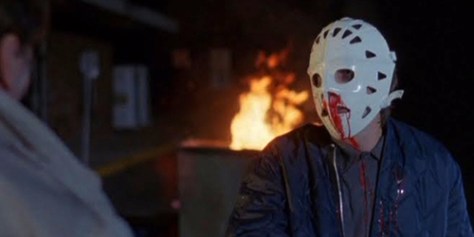
The next time it popped up was when Part 3 was being filmed, in the movie Alone in the Dark:
tumblr_inline_njq40tvI121qg31yk

I explored this obsessively in another article (actual, two articles), but I’m saying here and now: considering how blatantly derivative the F13 series is, I ain’t buyin’ their mask story. But I reluctantly digress. At least Part 3 had that kickass opening disco tune.

The ending of Friday the 13th Part 3 was supposed be just that: the end. There were no intentions of making a fourth film. In fact, the end of Part 3 mirrored the end of the original film exactly – with corpse popping out of the lake and grabbing our final girl, only to have it turn out to all be a dream. But just as they couldn’t help themselves that first time around, producers decided yet another sequel was necessary, and thus Friday the 13th: The Final Chapter was released.

So convinced that this was actually, really, truly going to be the final Friday film, original special effects artist Tom Savini agreed to come back just to kill off the monster he’d help create. Producer Frank Mancuso Jr. saw that the slasher craze was starting to settle down, and he didn’t want to be pigeonholed as simply a ‘horror producer’, so with financiers and even Paramount Pictures having his back, Mancuso Jr. decided to finally send Jason to Hell. Yeah, right.

Look, as I mentioned in the intro, I saw Freddy Krueger get killed off for good, too. (And in 3D, to boot!) The movie was called Freddy’s Dead: The Final Nightmare, for Pete’s sake (sorry, Pete). I’ve seen the book closed on all the big ones. I watched an underground bunker collapse on Leatherface, sealing his fate. He didn’t make a peep for years. And I saw Michael Myers perish in a hospital fire.

When asked in a 1982 interview – after the release of Halloween III: Season of the Witch – what happened to Halloween main characters Michael Myers and Dr. Loomis, John Carpenter answered:

“The Shape is dead. Pleasence’s character is dead, too, unfortunately.”

But money talks, baby. It screams. And when you can make a profit of $30M off a little a slice-and-dice, it’s kind of a no-brainer.

Also Friday the 13th: The Final Chapter introduced Tommy Jarvis. And he was just gettin’ started!

Join me tomorrow for my next installment, “Shemps, Tommy Jarvis, and the Modern Prometheus”!

(For more on this week’s series, check out my prior installment, “Killer Moms, Sequelitis, & Bagheads”!)

Killer Moms, Sequelitis, & Bagheads!

F1&2

I remember hearing that story when I was younger, the one about the mom who was filled with such maternal adrenaline after witnessing her kid get trapped under a car, that she was able to lift the car off her kid all on her own. Apparently, a mother’s love for her child is a powerful and scary thing – so best of luck to you if you happen to put their child in harm’s way…or worse.

During the mid and late-70s, there was sort of a boom when it came to psychotic-and-overprotetctive-moms in film. It started overseas with the Italian giallo film Deep Red (1975) (this is interesting because the giallo movement would be a direct influence on the American slasher craze, especially the early Friday the 13th films. Deep Red and Friday the 13th share another random bit of trivia: at the end of Friday, after Mrs. Voorhees gets a little taken off the top, we see her hands ball up into fists; these are actually special effects assistant Taso Stavrakis’s hands. Conversely, the closeup shots of the female killer’s hands in Deep Red, clad in black leather gloves, were performed by director Dario Argento.)

The killer mom trend continued with Carrie (1976), The Brood (1979), and Mother’s Day (1980).

moms

All of these films saw the mother either:

  • being driven to kill because someone had wronged their child
  • being driven to kill because their child had wronged them
  • birthing hideous, tumor-like growths that develop into little murderous albino kids (that’s The Brood)

Then in 1980, Friday the 13th was released – a little low-budget film that was intended to cash in on the success of the ultimate low-budget slasher, Halloween. For those of you visiting from another planet, the film is about a mother who avenges her child’s death by killing off the counselors at the camp he drowned many years before.

But as for a sequel? There weren’t plans. The film was meant as a stand-alone. Here’s what Friday writer Victor Miller had to say about the film:

“I took motherhood and turned it on its head and I think that was great fun. Mrs. Voorhees was the mother I’d always wanted—a mother who would have killed for her kids.” Miller was unhappy about the filmmakers’ decision to make Jason Voorhees the killer in the sequels. “Jason was dead from the very beginning. He was a victim, not a villain.”

In addition to Deep Red and Halloween, Friday the 13th ripped an idea from another infamous horror flick, Carrie. No, not the pig’s blood. I’m talking about the final dream sequence. In fact, the idea of Jason appearing at the end of the film was initially not used in the original script, and was actually suggested by makeup designer Tom Savini:

“The whole reason for the cliffhanger at the end was I had just seen Carrie, so I thought that we need a ‘chair jumper’ like that, and I said, ‘let’s bring in Jason.'”

The final scene from Carrie was actually inspired by the final scene in Deliverance, but alas that’s how the world of horror goes: reduce, reuse, recycle.

jump

 According to Victor Miller, Jason was only meant as a plot device and not intended to continue on his mother’s grisly work. But then sequelitis struck, and well, we all know how that goes.

The initial ideas for a sequel involved the Friday the 13th title being used for a series of films, released once a year, that would not have direct continuity with each other, but be a separate “scary movie” of their own right. If that sounds familiar to you horrorhounds, it’s because Halloween (the film Friday was originally trying to emulate) was toying with the same concept. This is what Tommy Lee Wallace, director of Halloween III, said about the Halloween sequel and future of the series:

“It is our intention to create an anthology out of the series, sort of along the lines of Night Gallery, or The Twilight Zone, only on a much larger scale.”

Friday producers insisted that the sequel have Jason Voorhees, even though his appearance in the original film was only meant to be a joke. And so, in 1981, Friday the 13th Part 2 was released. Halloween II was released just five months later.

Like the dead teens from the first film, the proposed sequel was already busy creating another heap of casualties: the entire team that had created the original. No one came back – not director Sean Cunningham, not writer Victor Miller, nor special effects maestro Tom Savini. Director Steve Miner came on board to take over, with Ron Kurz writing (Kurz had done uncredited writing on Friday the 13th.)

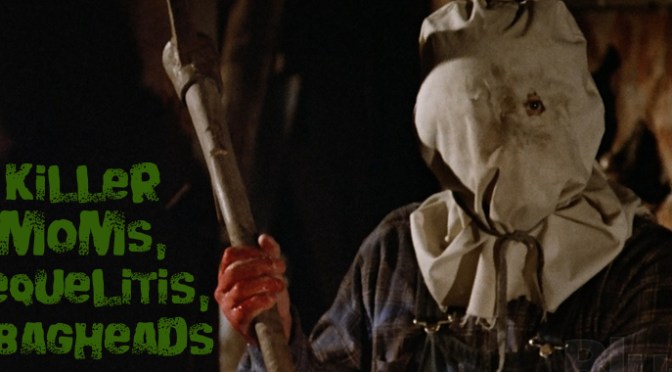
For Jason’s big screen debut, the production team decided to model his character after the killer from The Town That Dreaded Sundown by throwing a burlap sack over his head.

town

This ‘baghead’ look actually became popularized back in 1957, in the first episode of Perry Mason, “The Case of the Restless Redhead”. Coincidentally, 1957 is the same year of young Jason Voorhee’s supposed drowning.

bag

Since the release of Friday the 13th Part 2, the look would become synonymous with scary villain and would pop up in horror films like The Strangers, Triangle, and even westerns like The Assassination of Jesse James by the Coward Robert Ford.

bags

The look was even the basis for the semi-parody mumblecore film, Baghead, starring indie darling Great Gerwig.

Friday the 13th Part 2 would ‘borrow’ from the giallo movement once again. Two of the more memorable scenes – one including a machete to the face, the other seeing two lovers speared simultaneously – were lifted directly from Mario Bava’s Bay of Blood.

This was the first and last time Jason Voorhees had any sort of motivation for his killings, and therefore the last time he’d be portrayed as an empathetic character. The series began tragically – a boy drowning, his mother avenging his death, and then that same boy later avenging her death. But as with most franchises (especially A Nightmare on Elm Street and Halloween), the future sequels lose sight of what the characters original motivations were. But when your villain is 8 or 10 sequels deep, you’re bound to muddy the waters a bit.

Join me for my next installment where I visit the next two Friday the 13th sequels, with “Hockey Masks, the 3D Boom, & Final Chapters”!

Great Horror Scores!

title

Another day, another confusing article title. Hopefully no one misunderstood the heading to mean “my favorite pieces of horror swag that I have procured through various means”. No, friends, when I say score I’m talkin’ music, baby! Instrumentals and soundtracks.

Look: we all know John Carpenter and Goblin are the masters. They’re untouchable. Through the combination of their musical efforts, they’ve single-handedly (or ‘zit double-handedly?) changed the landscape of horror and exploitation scores: their long-lasting and far reaching influences can even be heard today in films like Drive, The Guest, and the Trent Reznor/Atticus Ross collaborations on The Social Network and Gone Girl. They’ve even influenced the new age of Bandcamp musicians such as Carpenter Brut and Umberto. In fact, I’d include The Social Network OST on this list if it were technically a horror movie because that score is so damn intense I find it almost nauseating (especially the opening track, good lord.)

The other two heavy hitters are, of course, Bernard Herrmann’s Psycho and John Williams’ Jaws. Both are perfect scores for perfect films — they’re spooky, eerie, tense, and unrelenting.

With that being said, here are a few of my personal favorites – ones that I think are actually really scary and that elevate the movies themselves from spooky to downright terrifying. Oh, and CLICK THE PIC to listen to a sample of the score!

pet
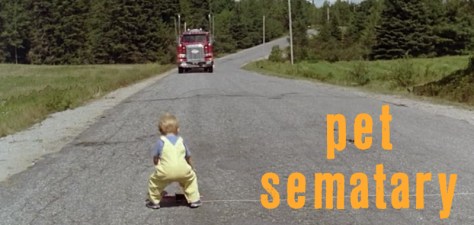
Who’d of thought a waltz could be scary? Somehow Elliot Goldenthal managed to pull it off: never has a 3/4 time signature stirred up such feelings of dread. Pet Sematary is a devastating movie about the loss of a child, not being able to cope, and the repercussions that go along with not being able to let go. So when interstitial pieces of a haunting and airy children’s choral fade in and remind you of the toddler’s death, you just wanna bury your head under a pillow. Combined with swelling strings and out-of-tune plinking piano, the score is all at once heart-wrenching and horrifying.

shining
The unsettling score from The Shining was made using a combination of four different composers. Wendy Carlos and Rachel Elkind composed the main score including the opening theme, which is freaky enough on its own. But when you toss in a few symphonic pieces by Béla Bartók and Krzysztof Penderecki, you no longer feel safe – it feels as though anything could happen. The Bartók pieces used in the film are lilting, wavering, string-driven pieces that often have a dream-like (or rather, nightmare-like) quality about them, bouncing between quiet thumping upright bass and huge, jarring strings that sound like a flurry of angered bees. In a way, they have almost a cartoonish feel to them, like they’re being conducted by Raymond Scott in Hell.

And the Penderecki pieces? Forget it. You will not hear more disturbing, bothersome pieces of music than those created by he. They’re chaotic, clanging, disjointed, screeching, claustrophobic, dizzying. You actually feel like you’re running from a madman when you’re listening to them. The influence of his unpredictable and unsettling style of music can be felt in many horror scores since – in fact, Harry Manfredini claims it was a Penderecki piece that inspired him to create the iconic “ki ki ki, ma ma ma” sound effect that has become synonymous with the Friday the 13th series. How about that?

tcm
Children’s toys, African instruments, pitchforks dragged across tables – all were used to create the rattling and unpleasant score, which was ‘composed’ by director Tobe Hooper and Wayne Bell. Hooper states in The Texas Chain Saw Massacre documentary The Shocking Truth that he was essentially misusing the instruments – forcing them to create sounds they weren’t originally intended for, and boy, he gets some freaky sounds to come out of those instruments. And using a farm implement to create sounds for the farm-set movie? Pretty meta stuff.

Much like the fate that befalls the group of youths – wherein they find themselves isolated and stranded on unfamiliar territory – we as the listener are affected in a similar fashion, with the score creating other-worldly sounds we can’t possibly believe were made in any conventional way, leaving us confused, terrified, and alone.

And let us not forget that iconic screech from the opening of the film, aka “the camera sound effect” – possibly the most horrifying sound committed to celluloid. (It would later be used in the opening of Marilyn Manson’s cover of I Put a Spell on You.)

drome
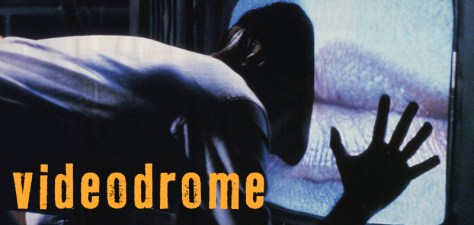
Composer Howard Shore and director David Cronenberg have had a long working relationship, with Shore composing music for all but one of Cronenberg’s films. And while almost all of his collaborations with Cronenberg have produced big, bright symphonic strings with perfectly placed shrieks and stabs, the score for Videodrome is singular and unlike any of his other compositions: it’s understated, throbbing, buzzing and humming with glitchy computerized vocals and stifled screams. Shore has the ability to morph his sound, to mold it to the images we see onscreen – an ability to compliment the visuals – and nowhere is that more apparent than here. James Woods, star of Videodrome, described Shore as “the Bernard Herrmann of the synthesizer”- that should tell you all you need to know. It’s creepy as hell. Lastly, I’d be surprised if it wasn’t inspired by the burgeoning industrial music scene – and if it didn’t inspire future industrial bands, as well.

candyman
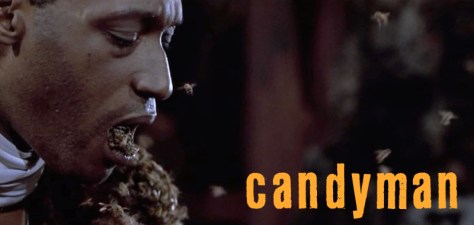
Philip Glass is great at composing music that is at once both sad and unsettling. Working mostly with piano and organ, he has the incredible ability of creating feelings of unease and foreboding, usually layering the repetitious sounds until a wall of insanity has been erected. His work also utilizes fast-paced calliope sounds (and in the case of Candyman, music box twinkles and choral voices) set to a bobbing rhythm, making you feel as though you’re on a carnival ride that’s spinning out of control.

I think the general consensus for Glass’s work on Candyman is that it’s a goddamn masterpiece, and I’m in full agreeance. But Phil was a little sore over his participation in the movie: when asked to score the film, he was under the impression it was going to be more arthouse than the standard slice-and-dice slasher flick it actually turned out to be. He was so put off by the film upon its release that he witheld his consent for the release of the recordings until 2001. But he wasn’t so discouraged as to not score any other horror films: in 1999 he rescored the entire original 1931 Dracula to great effect.

creep
Last but not least, John Harrison’s entire Creepshow score! The music Harrison created for the film manages to be simultaneously scary and playful – much like the horror comics the movie was paying homage to. Harrison also created the music for George A. Romero’s Day of the Dead, and he knocked that score outta the park, too! With Creepshow, he mixes urgent piano, swelling and ominous synths, choir vocals, schoolyard taunts, hallucinatory voices, and other random bits like evil laughter and thunder to create the most wonderful mix-bag of a score. It fits the movie so well that you really need to listen to it sans visuals to appreciate all of the nuances it has to offer. Composers of indie horror flicks nowadays may try to recapture the magic that these types of scores created back in their heyday, but it’s a Herculean task that, in my opinion, has not been matched since. Musta been something in the water back then. Who knows.

Before I end my tempo tirade (my musical mania, my soundtrack shill, etc.), I wanted to include two minor bits of music from other flicks that I enjoyed. Specific songs versus whole scores. First up, this track from the 2006 remake of The Hills Have Eyes. Perhaps out of context it won’t do much for you, but I assure you it’s perfectly placed within the film. There’s a reason it sounds like an alarm: it signals the end of any normalcy for the characters in the film.

Quick side rant: The use of a pop song (or non-threatening tune) used to create unease in either a horror trailer or horror film. In Hills case, they used “California Dreamin’” by The Mamas & The Papas in the trailer, and Webb Pierce’s yodeling country ditty “More and More” in the film. I can’t say for certain that The Hills Have Eyes (2006) was the first horror film to use an anachronistic song to create an unsettling vibe, but I can’t think of any others off the top of my head prior to Hills that used this technique. But plenty of other horror films would use (see: abuse) this trope: The Strangers (Joanna Newsom), You’re Next (Dwight Twilley), Texas Chainsaw 3D (Mark Lanegan’s cover of the Nick Lowe tune), Insidious (Tiny Tim). Hills was even ripped off by its own sequel — Devendra Banhart’s “Insect Eyes” was used in the trailer. Alright, end rant.

The final tune I wanted to include was “Hurdy Gurdy Man” by Donovan, on the soundtrack from David Fincher’s Zodiac. Apropos that it’s the last song I included, as it’s the last song in the film. As the film comes to a close, leaving more questions than answers, and those tremolo-laden vocals fade in…you’re assured a serious case of the goosebumps, trust me.

Well, that’s all my ramblin’ for now. Hopefully this article introduced you to some killer stuff you hadn’t heard before, or inspired you to do further research on the artists and composers I talked about!

Who’s Walter Paisley?

titleIn 1959, up-and-coming actor Dick Miller starred in the film A Bucket of Blood, an hour-long black and white horror flick set during the beatnik heyday, directed by prolific filmmaker Roger Corman (at that point, Corman had already directed over 20 films in the three short years he’d been making movies); it would prove to be a serendipitous meeting, one that would spawn a character that Miller would end up playing several times over the next 35 years.

blood

In A Bucket of Blood, Miller played ‘Walter Paisley’, a struggling artist who tries desperately to make his mark in the bourgeoning Bohemian art scene. It’s only after ol’ Walt starts killing people and pets alike – and covering them in clay – that he finally gets noticed and starts receiving the attention and accolades he’d wanted for so long. But that was only the beginning for that character. Here’s what Dick Miller recalled about playing Walter Paisley after A Bucket of Blood in a 2012 interview:

“When it first happened, or when it second happened, I didn’t think much of it. [Director Joe Dante] says, “You’re Walter Paisley!” I say, “Again?” He says, “It’s just a name, it’s not the character.” I said, “All right, fine.” I didn’t think about it. And then the third time it came up, he said, “You’re Walter Paisley!” I said, “Oh yeah?” It started to build, it was an inside joke. And by the fourth time he says, “You’re Walter Paisley,” I’m saying, “What is this? Every time there’s no name for the character, I become Walter Paisley.” He says, “So what, it’s an inside joke.”

holly

And so it was. In 1976, Joe Dante – at the time, an unknown assistant to the aforementioned Corman – made his feature film directorial debut with the Corman-produced Hollywood Boulevard. Keeping the camaraderie going, Dante decides to name Miller’s character ‘Walter Paisley’, and with this nod to his boss, Dante would set in motion an in-joke that would pop up in another six films!

howl

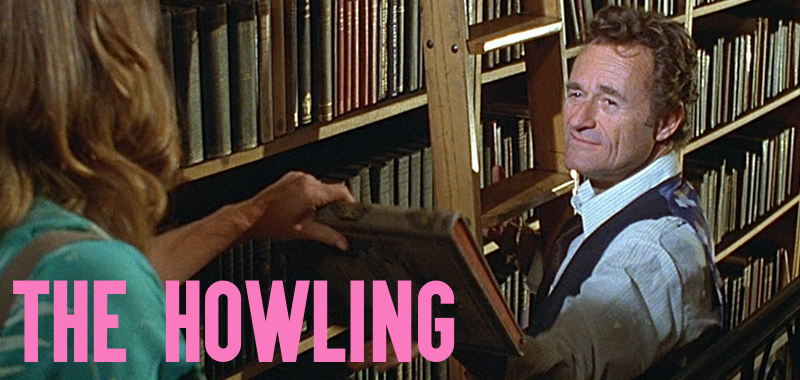
Dante would resurrect the Paisley character in 1981 with his awesome werewolf flick The Howling. In the film, Paisley is the owner of an occult bookshop. His role is a pivotal one: he not only provides the protagonist with all the necessary information on how to stop the werewolves…but also the silver bullets to actually get the job done. Miller claims this is one of his favorite roles. The movie also has cameos from Roger Corman, as well as sci-fi cornerstone Forrest J Ackerman (Miller would later play a character named ‘Mr. Ackerman’ in an episode of ER.)

zone

Once again, under the direction of Joe Dante, ‘Walter Paisley’ makes yet another onscreen appearance – this time in the 1983 classic Twilight Zone: The Movie. It’s a brief appearance, as the Paisley cameos sometimes are. This time, Walter is the proprietor of a little diner. He pops up in the third segment of the film which is entitled, It’s a Good Life. Blink and you could miss him.

mall

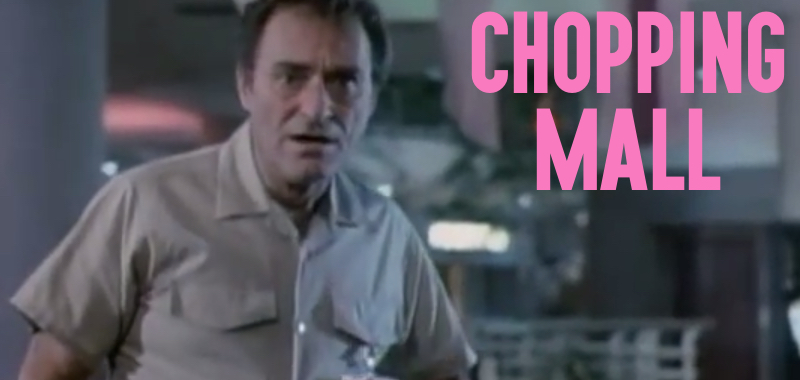
 1986 would prove to be the most active year yet for the character, seeing him show up in two films released just a few months apart. The first was the Corman-produced Chopping Mall from director Jim Wynorski. Walt, a mall janitor, is electrocuted to death by the security robots that are running amok through the shopping center. Paisley isn’t the only fictional character to be carried over from another film to this one. In an odd inclusion, Paul Bartel and Mary Woronov reprise their Eating Raoul characters, ‘Paul & Mary Bland’. The film also stars genre staples Barbara Crampton, Angus Scrimm, and Gerrit Graham.

(Fun Fact: Woronov, Bartel, Graham, Miller, as well as Roger Corman and Joe Dante, had all previously appeared together in the Bartel-directed Cannonball!)

creeps

 Just a couple months after his appearance in Chopping Mall, the Paisley character would pop up again, this time in the Fred Dekker-directed genre bending Night of the Creeps. Paisley is a cop in this film – a role Miller would end up playing in a majority of his movies. Night of the Creeps is intentionally a very referential film, including naming all of the characters after famous horror directors, having Greg Nicotero and Howard Berger play zombies, and even naming the college the kids go to “Corman University”. So it doesn’t seem as though Paisley is there within the Dante/Corman universe, but rather is being paid homage to by Dekker.

rebel

Finally we have Rebel Highway, a short-lived television program set during the 1950s that aired on Showtime back in the mid-90s. Each episode ran about an hour and half long, and they were each directed by a different genre director – Robert Rodriguez, John Milius, and William Friedkin – just to name a few. Walter Paisley popped up – playing a cop – in the sixth episode entitled, “Shake, Rattle and Rock!”, alongside the aforementioned Mary Woronov and Gerrit Graham. Curiously enough, Joe Dante would end up directing an episode of Rebel Highway, and would even include Dick Miller, yet the character was named “Roy Farrell”. Makes ya wonder.

So there you have it. Seven times Dick Miller has played “Walter Paisley”. A Bucket of Blood was remade in 1995, with Anthony Michael Hall taking over the lead role. But we all know there’s only one Walter Paisley: that guy Dick Miller.