Category Archives: All Articles

I Love Practical Effects!

Until a few weeks ago, I had totally forgotten that my first obsession as a kid — before I started making home movies, before I started making zines — was special effects. More specifically: the latex-laden, gore-filled, squib-bursting effects I was consuming via every horror film I watched on a daily basis.

I was talking with a buddy recently (super talented and humble Todd who runs Junk Fed – buy all his creations; follow all his media outlets), and he had mentioned how, as a kid, one of the first things he wanted to be when he grew up was a special effects guy. And that’s when my memory was jogged, and all those long-buried similar hopes and dreams of my own came flooding back. I, too, wanted to be a special effects guy!

I remember once filling a ziplock bag with red food coloring and water and then taping it to a little square of Styrofoam, and then taping that contraption to my chest. I threw on an old white t-shirt, grabbed a sharpened pencil, and ran into the kitchen where my mom was. “Hey, mom, look!” I shouted. She turned around to see me thrusting the pencil into my chest – into the DIY squib – and having blood splatter out of the wound, soaking the shirt in red. The pencil, buried deep in the Styrofoam, stood erect from my chest like a little diving board. Boy, was I proud of that one. Later, I would see the movie F/X and it made me realize that if there was a Hollywood movie based around the art of creating effects, it must be pretty well-regarded.

Besides being inspired by the films I was watching, my fascination with gory make-up was also fueled by my regular intake of Fangoria Magazine. And it was in this magazine that I came across ads for the Joe Blasco Make-up Artist Training Center. I was convinced this is where I had to go. Thankfully, I strayed from that path because upon doing some research on the school for this article, I’ve found nothing but atrocious reviews for it. Dodged a bullet there!

Eventually, my serious interest in pursuing make-up effects as a career waned as I got older, but my fascination with the craft never dulled and my love of horror films has only grown as the years have gone on.

With all that said, there are certain ‘Masters of the Craft’ – guys who created some of the most memorable special effects from the mids-70s to the late-80s, the heyday of practical horror effects. So with this list, I wanna point out who they are and what my favorite work from them has been.

dick-smith

The late Dick Smith was the godfather of make-up effects. He was the king. He invented the now standard method of using multiple facial prosthetics versus one single face mask, which was a less restrictive approach and allowed actors to use more facial expressions underneath their make-up. One of his specialities — and something I don’t anyone has come near to perfecting the way Smith did — was age make-up. He made Dustin Hoffman look 120-years-old in Little Big Man and made David Bowie look 150-years-old in The Hunger. He’d use his unbelievable knack for age make-up in several films, like The Godfather and Carnal Knowledge, and even won an Academy Award for his work on Amadeus. But it was his contributions to the horrific The Exorcist that changed the special effects game forever. As his protégé (the recently retired) Rick Baker tells it:

The Exorcist was really a turning point for make-up special effects. Dick showed that makeup wasn’t just about making people look scary or old, but had many applications. He figured out a way to make the welts swell up on Linda Blair’s stomach, to make her head spin around, and he created the vomit scenes.

He also wrote The DIY Monster Make-Up Handbook, something I’d check out from the library religiously as a kid. In 2011, he was awarded the Academy Honorary Award for his life’s work — the first ever make-up artist to be so honored. I implore even the toughest brute with the blackest heart to watch that video and not get a little misty.

rob-bottin

Something I feel most of the young FX dudes from the 80s share is a wild streak: long hair, scruffy faces, heavy metal t-shirts. Rob Bottin, in my opinion, was the epitome of the insane special effects guy from the 80s — not only displayed in his look, but also his work. And there was that one time he caused an explosion on set, and it doesn’t get more insane than that.

He got his start by sending drawings to then-established FX guy Rick Baker, who loved what he saw and agreed to hire him. And how old was Bottin at the time? He was just 14-years-old. Bottin would go on to create some of the most mind-bending, wet and wild effects of the 80s and 90s: All the creatures from The Thing (1982); He designed the legendary look of RoboCop (1987), a movie which includes the infamous ‘toxic waste melting man‘ scene; Jack Nicholson’s bizarre transformations in The Witches of Eastwick (1987); All of the eye-popping, head-unfurling, conjoined-baby effects from Total Recall (1990); and the trippy lizard scene in Fear and Loathing in Las Vegas (1997). But the scene I love the most that Bottin created is from The Thing. It’s perhaps the most tense, horrifying, and unbelievable (and memorable!) sequences in horror effects history:

yagher

Kevin Yagher is one of the lucky few FX people to make it out of the 80s unscathed, working with regularity and even transitioning into doing make-up and effects for TV. And though he’s stayed continuously busy, it’s three of his contributions to the genre during the 80s that literally changed the face of horror.

Prior to Yagher’s involvement, Freddy Krueger’s face was mostly obscured by darkness in the original A Nightmare on Elm Street (1984). But after joining the crew on the sequel, Freddy’s face became noticeably more menacing, the burn patterns more realistic and intricate. It became ‘the Freddy Krueger look’, one that was a fan favorite during Yagher’s run for ANOES 2, ANOES 3, and ANOES 4. Note the differences between the original Krueger make-up on the left and Yagher’s Freddy on the right.

face

Yagher would also create two more pieces of horror history during the 80s: Chucky, the doll from the Child’s Play series, and The Cryptkeeper from the Tales from the Crypt TV show. Kevin Yagher’s contributions to horror have been historic to say the least.

knb

For the uninitiated, K.N.B. is an acronym for Kurtzman (Robert), Nicotero (Gregory), and Berger (Howard), the three dudes who created what would end up being (still) the most prolific special effects company ever. Launched in 1988, the group has worked on almost any relevant film project, horror and otherwise, not to mention a multitude of TV programs. It’s no exaggeration when I say ‘every production’; a quick peek at Greg Nicotero’s IMDB page shows a glimpse of just how massive their scope has been. Robert Kurtzman left the group in the early 2000s, but even his solo career has matched the enormity of what Nicotero & Berger continue to do. I could write pages upon pages about their contribution to the genre, but the one that immediately comes to mind – the one that actually truly shocked me when I first saw it (pardon the pun) – was Intruder (1989). The “last great slasher of the 80s”, Intruder is full of humor and horror, the way slashers oughtta be. And boy, those special effects. Look at the gif below and then find a copy of Intruder to watch, immediately.

tumblr_nd6pcytZaJ1qdezf9o1_500

walas

Another anonymous magician who dreamt up some of the most memorable imagery and characters from the 80s (and pop culture’s collective childhood), Chris Walas is responsible not only for creating the look of the Gremlins, but also the unforgettable ‘melting Nazis’ in Raiders of the Lost Ark. He also gave everyone the heebie-jeebies with his spider creations in Arachnophobia (1990) and would go on to direct the criminally underrated The Vagrant (1992). His greatest contribution however, would have to be the effects he supplied for David Cronenberg’s 1986 masterpiece, The Flyeffects that won him an Academy Award.

chiodos

Dealing more with puppets and puppet design and stop-motion claymation rather than all the aforementioned splatter, The Chiodo Brothers stick out on this list – but I’d be remiss not include them. They created the Crites from Critters; they created the Killer Klowns from Outer Space; they created the goblins from Ernest Scared Stupid. Oh, and they created this purdy lady right here:

tumblr_mudj7scIXr1r3o2fmo1_500

TOM-SAVINI

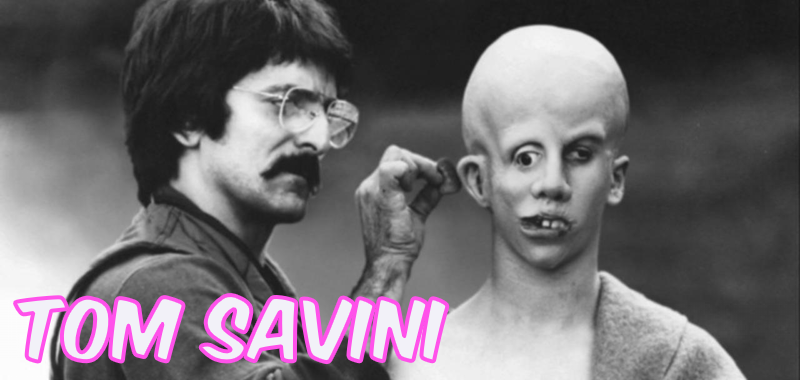
Much like K.N.B., I feel like Tom Savini’s contributions to the genre are too vast to itemize here. Plus, I mean, c’mon! It’s Tom Savini! The Sultan of Splatter! You know what he’s done. To compartmentalize his career into 3 sections, he:

  1. Made headshots look real and gruesome
  2. Made zombies pulling people apart and eating their guts look real and gruesome
  3. Made Jason Voorhees as a kid look real gruesome.

My favorite work of his is from Day of the Dead (1985). Everything Savini became notorious for was put on full display in this movie: the headshots, the eviscerations, impalements, the zombie puppets, the half-bodies, the rounded machete-blade trick. All of it! Like most of his brethren, Savini slowly transitioned out of SFX in the early 90s to focus on other things, mainly acting and occasionally directing.

winston

When it came to providing effects for the big guns – Steven Spielberg, James Cameron, Tim Burton, Robert Zemeckis, to name a few – the late (great) Stan Winston was the go-to guy. Giant, realistic dinosaurs? Liquid metal bad guy from the future? Lubed up Xenomorphs spitting deadly acid? No problem. As the tide began to turn and as computer animation and effects started to become more commonplace, even though Stan Winston’s initial work was very traditional, he was still able to make a fluid transition and work harmoniously with the new technology. And it’s because of his respect and understanding of these new ways, combined with his old-school approach that his resultant effects were some of the most believable things captured on film. Watch this pissed off T. rex attack a car full of small kids. Then watch the trailer for Jurassic World. Then come back and look me in the eye and tell me modern CGI doesn’t suck a big one.

rick-baker

Last but certainly not least, the man of the hour, Rick Baker. The man is as big a legend as the rest of them, but somehow more. He created the blueprint of the now-standard look of werewolf transformation scenes in An American Werewolf in London (1981). He did the zombies in Michael Jackson’s “Thriller” music video. He made bigfoot for Harry and the Hendersons. He made Eddie Murphy white in Coming to America and made him obese in The Nutty Professor. Men in Black, How the Grinch Stole Christmas, Hellboy. Rick Baker did it all. His imagination was limitless, his skills and abilities unmatched. It’s hard to pick one thing of his that stands out because it’s all so different. But I’ll end with a classic.

To all the special effects people – past and present – like the schoolteachers, garbagemen, and social workers of this world you’re often shamefully overlooked and underthanked. But to the effects wizard of the late 70s and 80s who helped shape my warped and wonderful mind: I can’t thank you enough!

Stephen King’s Dollar Babies!

Den of Geek wrote a similar article on the same topic recently. To clear up any concerns I’ve included a disclaimer/clarification after this article if you’re interested.*

king

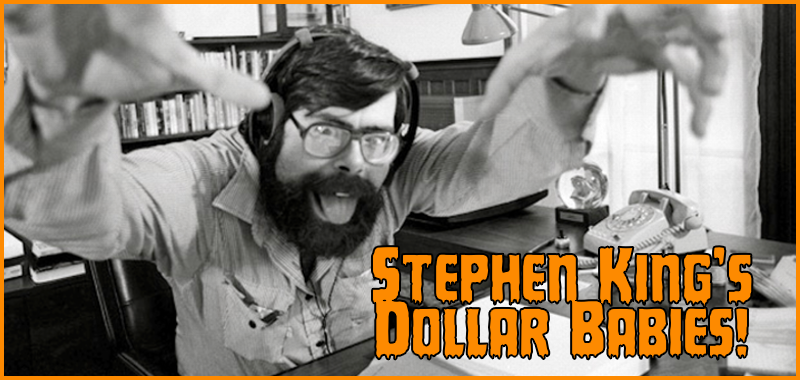
If you’ve never read Stephen King’s On Writing: A Memoir of the Craft – a quintessential text for any aspiring writer and/or creative type – I highly suggest checking it out ASAP from your nearest lie-berry. Even if you’re not at all interested in writing, the book still works as an amazing autobiography, detailing every part of King’s life – from his earliest memories growing up to his first successes an an author.

And that’s one of the truly amazing parts of the book: we witness him go from a nobody to a somebody after years of busting his hump. King and his wife Tabitha (Tabby, to Steve) were married with a newborn on their hands, struggling to make ends meet. He was teacher and grading papers during the day, and writing his stories at night. And after chipping away at it long enough – and nearly almost giving up – Carrie was finally published, and the rest is history. King is humble and forthright in On Writing – he makes no airs about the fact that he’s since made boatloads of money and doesn’t need to write another book for the next few millennia. But he’s a writer in the truest sense: he writes because he’s so passionate about it; he can’t do anything else.

So it was with this understanding of being utterly devoted to creating works of art – combined with the fact that he didn’t really need any more money – that King began allowing aspiring film makers the right to film any of his short stories… for one dollar. He labeled these projects his “Dollar Babies“.

By the late 1970s King had amassed a large collection of short stories, and after the successes of his full length novels Carrie, ‘Salem’s Lot, and The Shining, he started receiving correspondence from college-aged film makers hoping to adapt a piece of his work. As King tells it:

Around 1977 or so, when I started having some popular success, I saw a way to give back a little of the joy the movies had given me. ‘77 was the year young film makers – college students, for the most part – started writing me about the stories I’d published, wanting to make short films out of them. Over the objections of my accountant, who saw all sorts of possible legal problems, I established a policy which still holds today. I will grant any student filmmaker the right to make a movie out of any short story I have written, so long as the film rights are still mine to assign. I ask them to sign a paper promising that no resulting film will be exhibited commercially without approval, and that they send me a videotape of the finished work. For this one-time right I ask a dollar. I have made the dollar-deal, as I call it, over my accountant’s moans and head-clutching protests sixteen or seventeen times as of this writing [1996].”

So with those simple rules in place, students and ambitious directors were allowed to have at it. The professionalism on these projects covered both ends of the spectrum, from hundred-dollar cheapies shot on VHS, to big-budgeted badboys like the adaptation of Umney’s Last Case, which was shot on 35mm film for over $60,000.

Some of these little labors of love would end up being launching pads for soon-to-be award winning directors. So let’s look at a few of the first Dollar Babies ever produced, and the teams behind them.

boog

The Boogeyman is the first Dollar Baby to be produced. Released in 1982 (based on a story written by King in 1973), it was directed by Jeffrey C. Schiro who would later get into TV, directing an episode of Tales from the Darkside. It had a budget of a whopping $20,000! In 1982, that was practically a million bucks. While Schiro and his crew didn’t go on to do much more after this little flick, the seeds were planted for an exciting new venture with endless possibilities.

crow

This 30 minute short came out in 1983 and was based on King’s 1977 short story, Children of the Corn. This is where things get interesting: in the beginning of King’s career, there was really only interest from major movie studios in his full length novels, which is why he allowed budding auteurs to adapt his shorter works for only a dollar. While not necessarily a loophole, it did allow a fortunate few to be the first to adapt what would later become major motion pictures. Disciples of the Crow was the first instance of this, but it wouldn’t be the last.

woman

Perhaps the most prominent and significant of all the entries, The Woman in the Room was not only Frank Darabont’s first film but also technically the first Dollar Baby. A 20-year-old Darabont, who wasn’t even involved in the movie industry at the time, loved the story so much that he wrote King a letter asking if he could make a short film of it. King, keen on conceptualizing a way to allow this put into action the Dollar Babies. It took Darabont over 3 years and $35,000 to complete the film, making his entry third on the list – but he was the first one to approach King with the idea back in 1980. King went on to say it was, “Clearly the best of the short films made from my stuff.” So good, in fact, that Darabont and his crew entered it for Oscar consideration in the short film category. It even ended up being purchased (along with The Boogeyman and Disciples of the Crow) for release on home video. It would be the beginning of a long and successful career for Darabont, who would end up adapting several more of King’s works – The Mist, The Green Mile – and would eventually win the Oscar for Best Picture (as well as pretty much every other category) for The Shawshank Redemption – which of course, was based on a short story by Stephen King.

mower

Last on the list, we have the whole reason I wrote this piece: The Lawnmower Man. I was surfin’ the net as kids are wont to do these days, when I fell down one of those rabbit holes – the deep and endless kind where one click leads to another click, leads to another, and another; from Wikipedia, to Youtube, and back again. Link to link to link. I’d somehow found myself watching what I thought was some cheapo home movie on Youtube simply entitled The Lawnmower Man. And I wasn’t entirely wrong: it is a cheapo homemade movie, and it is entitled The Lawnmower Man. But what I didn’t realize until seeing the opening credits was that it was indeed based on Stephen King’s short story of the same name.

Most notable is the fact that this short film is more faithful to its source material than 1992’s big-budgeted take on the story, which bears absolutely no resemblance to King’s work other than in name. Pretty impressive: some anonymous students with $5,000 did a better job of adapting a Stephen King story than Hollywood could with 10 million smackers.

And that’s the beauty of the crossroads where determination, creativity, passion and respect intersect. King is an artist – once a very struggling artist – and he knows what it’s like to have that fire burning so badly in your belly; nothing can snuff it out, but being allowed to create your art can at least temper the flames for the time being.

—————————————-

*Whenever genius strikes me – whether I’m in the shower, trying to fall asleep, or drinking an Olympic-size swimming pool amount of beer (almost always that last one) – the first thing I do is run to Google. I immediately punch in whatever article idea I have to make sure of two things:

  1. That it’s an original idea. And,
  2. That if it has been done before, either
    A. Enough time has passed for my article to be fresh, or
    B. My article introduces some different or new information than the previous articles.

In this Internet Age when everything is a rehash of a rehash, it’s important to me to do my best to not add anymore overdone, hacky detritus to the pile of listicles, burying worthwhile reading deep underneath. Sometimes I write an entirely original piece (like my article on the name Francis in 80s movies); sometimes I write on a familiar topic, like Jason Voorhees. Either way, I try my best to make it my own – and it’s always a challenge I welcome.

NOW, all that being said, when I wanted to write this piece on Stephen King and his “Dollar Baby” concept, I did like I always do and searched Google. And damn it all, wouldn’t you know it that Den of Geek just wrote a piece on this same topic not even 2 months ago! Alas, that’s the way things go when you’re trying to generate new material in this fast-paced web-based world. I decided to proceed anyway because after reading their take, I thought I definitely had more to add. I’m an admittedly long-winded, overly-explanatory writer, and to me this is a definite strong point; I make sure to cover every facet, explain every detail, and inject as much personality in my articles as I can because I want to convey to the reader that I not only know what I’m talking about, but that I actually enjoy the subject I’m writing about. I don’t want it to read like I’m some paid shill who got an email full of factoids to investigate from my boss. Because I didn’t, I’m not being paid, and I don’t have a boss. It’s all me, baby.

Anyway, I included this disclaimer because, I don’t know…I’d feel grimy otherwise. I still encourage you to read their piece, too! And then tell me mine was better, naturally.


Friday the 13th: The Final Chapter as an 80s Sitcom!

tumblr_mpmy1hTXD11srsy9vo1_500Y’know if you study that above gif closely, it’s almost as if Jason is giving little Tommy Jarvis a big hug.

Perhaps it’s this demented way of thinking that made me realize when you remove all the murders from Friday the 13th: The Final Chapter, it actually looks like some cheesy 80s sitcom. So, I did just that!

I finished by slapping some nondescipt 80s keyboard music behind it, and boom: no longer an 80s horror movie, but an 80s sitcom about a loving family with a big cast of characters and that wacky neighbor Jason who always seems to barge in at the wrong time.

So enjoy. Y’know, now that I’m thinking about it, those wacky teens from A Nightmare on Elm Street 3 would make for a great Just the Ten of Us-style show. Hmm…

Remembering “MonsterVision”

I was raised by T.V. That makes my parents sound really neglectful, but I assure they weren’t. There was just no activity I found more comforting than watching T.V., and if it kept me quiet and compliant then my folks were definitely okay with it. Even if I was drawing pictures, or eating a snack, or playing with GI Joes, the T.V. was guaranteed to be on, if nothing more than for those little moments when my concentration on the task at hand would break and I’d want a different distraction. My life was pretty much like the intro to HBO’s Dream On (making a reference to T.V. about how my life is like…T.V.) Needless to say, I have a lot of memories of hours spent in front of the tube. Those memories remind me of being young, they remind me of being home; they’re happy memories.

I won’t say T.V. was better back then, but I feel like basic cable television took a lot of chances at a time when pushing the boundaries or being edgy wasn’t expected tumblr_m72vn8wxnO1r3eyr4o1_400the way it is today. A lot of artistic chances. At times watching T.V. made me feel like I was on another planet or seeing things that no one else could possibly understand. I’m sure it had something to do with my young age, but it wasn’t just entirely that. There was the surreal, salacious animations of Liquid Television. There was the straight-to-video schlock of USA Up All Night, which was hosted at different times by both Gilbert Gottfried and Rhonda Shear. There was Comedy Central, back when it was called ‘The Comedy Network’ and literally only played episodes of Mystery Science Theater 3000, all day. It was like the Wild West. It was exciting.

Saturday night was a particularly stacked night for television in the Jose household.

hqdefault-5It would begin with SNICK – the clever portmanteau of “Saturday Night Nickelodeon”. The line-up would change over the years, but the two heavy hitters – The Ren & Stimpy Show and Are You Afraid of the Dark? – were constants. After Are You Afraid of the Dark? was over, I’d immediately switch over to HBO for a couple episodes of Tales From the Crypt. I’ve often talked with friends about how this era (from ages 9 to 12) was great because I wasn’t too young for the hard stuff but I also wasn’t too old for the softer stuff.
After TFTC, if there wasn’t anything of interest on (sometimes an episode of Dream On, and a few years later, the great Dennis Miller Live), I’d see if there was anything good happening on Saturday Night Live. After SNL, I’d flip over between two local stations – one played Liquid Television, the other played old shorts of The Three Stooges. Everything I’ve named has been instrumental in making me who I am today. In fact, at times I feel less like an actual person and more like the perfect algorithm painstakingly constructed by a desperate television programmer with pages of Nielsen ratings stuffed in his backpocket. Back then I was like Lewis and/or Clark, discovering new, untraversed landscapes of cathode-illuminated interlacing. But I digress.

Onto the topic at hand: MonsterVision. At some point during my exploration, I discovered a show I would immediately fall in love with and abandon all other Saturday night fare for (who am I kidding – I was an obsessive ‘flipper’, constantly jumping back and forth between channels.)

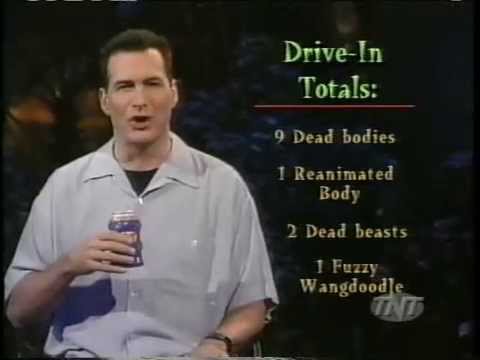
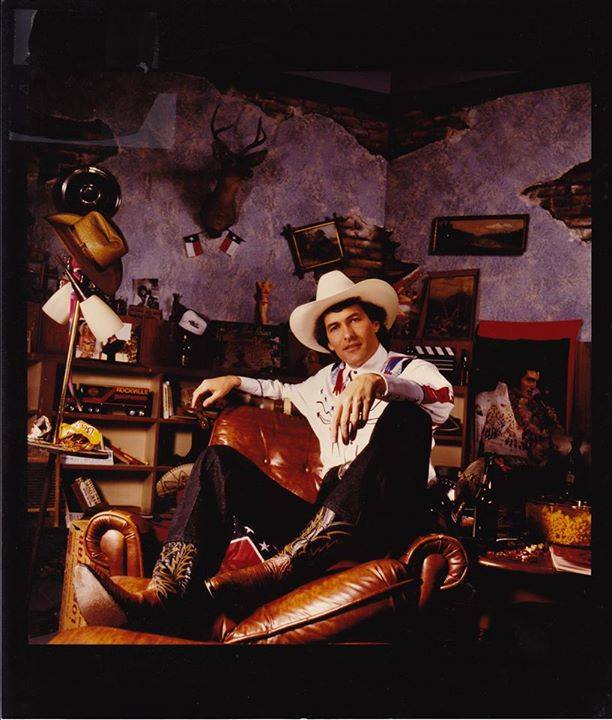
Popping out from a mobile home that was resting on cinder blocks, with a koozie-nuzzled Lone Star in hand, was a tall, bolo tie-wearing good ol’ boy named Joe Bob Briggs. He spoke excitedly in his 100% authentic Texan twang about The Three B’s: blood, breasts, and beasts. He had his own lingo, affixing “-fu” to the ends of words, an all-purpose suffix to give them more oomph. He would break down a movie by how many decapitations, nekkid women, and explosions it had and tally them all on his ‘drive-in totals’ list. And he never missed an opportunity to talk about his metallic blue ’73 Toronado.

Needless to say, he was the coolest dude on T.V. (especially to a 10 year old boy.)

hqdefault-2Perhaps it’s because he reminded me of my own dad – a tall and lanky beer drinker full of antiquated southern sayings himself – that I took so immediately to Joe Bob. He reminded me of the man that raised me – doesn’t get more familiar than that.

During MonsterVision, Joe Bob would usually show two movies, beginning with the more popular film first. On special occasions he’d do something longer – like a memorable Halloween episode which saw him have a Friday the 13th marathon. The running joke throughout the entire 12+ hour episode was what a crappy TV station TNT was and how cheap TNT magnate (and Joe Bob’s boss) Ted Turner was. But this type of trash talking happened in almost episode.

This was perhaps the most magical and enjoyable aspect of the show: the fact that there didn’t seem to be any rules. Joe Bob could get away with anything.

In between commercial breaks before heading back to the movie, Joe Bob would come on and talk about whatever he wanted while nipping at his beer. His ex-wife, guys he used to know, his opinions on world issues. Every episode he’d be visited by buxom mail girl Honey (and in later episodes, buxom mail girl Rusty.) After a few minutes of flirting with Honey desperately and unsuccessfully, she’d deliver actual fanmail which Joe Bob would read on the air and respond to in his own witty Southern way. The format was loose and off-the-cuff, and that made it feel more personable, as if Joe Bob were talking to you directly. Another common occurrence was Joe Bob interacting with his off-screen camera crew (who could often be heard snickering and cheering.)

Lastly, one of my favorite things about Joe Bob is his enthusiasm. You can tell that he not only loves the films he watches and reviews, but that he loves doing it. The earnestness of his zeal is as clear as day – this man is the real deal. He wasn’t some paid talking head being fed facts from a TelePrompter. This was before the internet, before Google, before Wikipedia. All of Joe Bob’s wisdom was learned, soaked up from his days and nights spent sitting in front of a 70-foot vinyl movie screen.

Joe Bob Briggs previously had a show on TMC, Joe Bob’s Drive-In Theater, but my introduction to the man was through MonsterVision on TNT, which followed the same exact format. And as I got older, I tracked down other Joe Bob outlets, such as his stand-up special Joe Bob Briggs: Dead in Concert, his renowned film commentaries, as well as his books (I’ve only read Joe Bob Goes to the Drive In, but I love it and say check it out.) He’s a personal hero, sure – but he’s much more than that. He’s an active and outspoken supporter of film and the horror/exploitation genre. And he’s probably the smartest hillbilly there ever was, graduating from Vanderbilt University on a writing scholarship.

So Joe Bob, this one’s for you. An endless amount thanks is due to you for your contributions to the horror and exploitation scene, and for showing that being a beer-swilling goofball who’s chock-full of esoteric movie facts ain’t such a bad thing to be.

Everyone reading this, do yourself a favor and take the Drive-In Oath. And remember: The drive-in will never die.

10519183_10206130992692472_7458731436523027894_n

 MonsterVision on Facebook

Not-so-awful Sequels! (Part One)

Hollywood gets a bad rap. People think of it as this horrible money machine, but the truth is Hollywood has nothing but a filmmaker’s best interest in mind. Believe it or not, producers and financiers actually care about creativity and artistic vision and want nothing more than to protect the filmmaker’s creation, and they want to encourage originality by supporting new ideas. Hollywood is about integrity and respect.

No, I’m only kidding. Hollywood is a bloated, greedy monster that cares only about how much money a film makes and absolutely nothing else. And if a film can somehow keep making boatloads of money years after its been released, even better! But how do you do that? Make it a franchise. There are no better cash-cows than horror franchises. Perhaps you’ve heard New Line Cinema referred to as “The House that Freddy Built“, due to the popularity of the A Nightmare on Elm Street series. And how do you build a house? Money. Lots of money. Continue reading Not-so-awful Sequels! (Part One)

The Horror of the Internet!

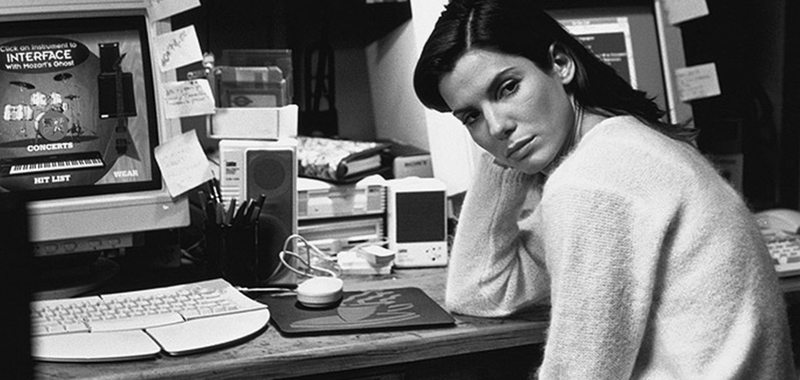
The internet has been scary ever since America’s sweetheart Sandy Bullock was thrust into danger and forced to fight for her identity and – more importantly – life in 1995’s The Net. In fact, and don’t quote me on this (unless I end up being right, of course) but, I think that may even be the first “The internet! It’s scary!” movie to be released.

sandy

Since then, as the popularity of internet-usage and Angelfire domains has grown, so has the inclusion of the internet or internet-themes in horror and suspense films. It’s a natural and understandable progression: horror has to tap into current and relevant topics and issues in order to be effective. I mean, a movie about killer polyester pants maybe wouldn’t be as effective today as it would’ve been 40 years ago. And if Lloyd Kaufman is reading this: back off – that idea is all mine.

The ‘internet is scary’ as a horror theme is still going strong today, with the soon to be released Unfriended, a film that is being proudly promoted as the first movie to take place solely through webcams – a concept which was originally used in 2012’s V/H/S, confusingly enough. That’s right: a movie named for the obsolete act of analog recording onto magnetic tape has an entire segment dedicated to live computer chat. Try to figure that one out.

Unfriended is also being deceptively promoted as ‘shot in one take’. I mean, gimme a break. For one, it just isn’t true. But also, you’re way late to the game, baby – this ain’t anything new to the genre: the Spanish horror film La Casa Muda (The Silent House) did the ‘one take’ thing in 2010, and Secuestrados (Kidnapped) (also from 2010) is composed of just 12 shots. And it ain’t anything Gaspar Noe hasn’t explored at length in his films – and effectively, I might add. But I reluctantly digress. But also, watch those movies I just mentioned.

So with this overextended FaceTime flick soon to be released, I thought I’d dust of some old classics – much in the way one would dust off an old AOL subscription disc. Sit back, sign in, and listen for the dial-up as I look back on a few films that tried to warn us how scary the internet is.

COPY1

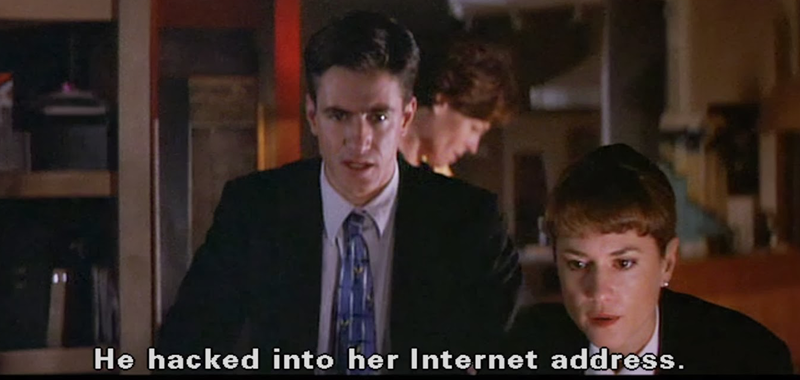
The same year The Net was released, Copycat came out. And while not technically an internet horror flick–

COPY2

Alright, I take that back. It’s kind of an internet crime thriller. Sigourney Weaver plays a criminal psychologist who is left so emotionally broken after she’s attacked by a serial killer that she holes up in her hi-tech apartment and communicates with the outside world solely through her computer. Eventually, a different killer (hence the title of the film) starts harassing her via her computer and wreaking all sorts of havoc in her life. I saw this in the theater with my folks when I was 11 because I thought Harry Connick Jr. was a terrifying character in the preview. It was an early lesson in “movie previews are only there to get you in the theater, no matter how deceptive they may be.” Also: love that line from the above picture.

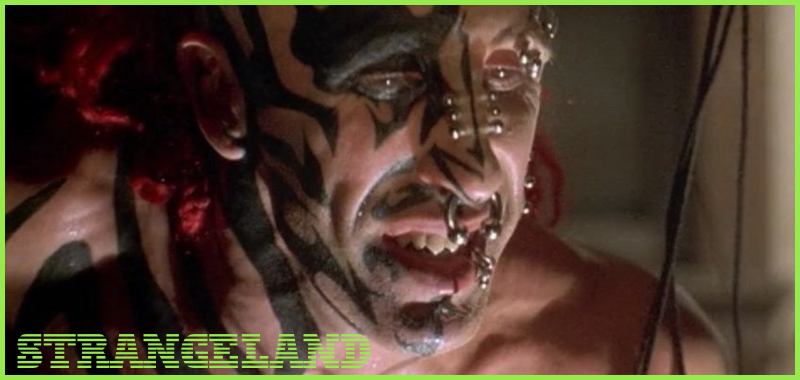
strange

Long before Rob Zombie realized hard rock dudes could make super referential horror movies, Dee Snider (of Twisted Sister fame) wrote and produced Strangeland, which I think is the first chatroom-based horror film. For one of the first films based around the subject, this movie really came out guns ablazin’: a young girl and her friend are lured via chatroom to a sadistic murderer’s house, where – surprise – he tortures and kills teen girls. Although the movie was generally pretty panned, I think it took a lot of chances – or at least tried some new things, and dipped into some often unexplored themes when it comes to your standard horror flicks.

fear

I have, admittedly (and proudly), not seen the universally hated shitfest that is Feardotcom. From the terrible title to the Stephen Dorff kiss of death, the movie seemed doomed from the start. From what I can piece together, it sounds like a mix between The Ring and Videodrome, with tons of extreme violence sprinkled in for good measure. You’d expect more from the dude who designed Michael Myers’s mask. One final thing about the atrocious title before we move on: when the movie was in pre-production, the title of the website used in the film was “fear.com”, despite the producers not owning the rights to that name. They later had to change the name to “feardotcom.com”, which is so laughably awful you wonder why they just didn’t come up with an entirely different name for the website altogether.

2002 saw the release of another terrible internet-based flick with a similarly appalling name (and another I’ve happily avoided), Swimf@n. It seems like Fatal Attraction for the web age. All I know is: 2002 was not a good year for web-based horror. Thankfully, 2005 saw two good ‘net flicks be released.

hardcandy

First was Hard Candy, starring a then unknown-to-American-audiences Ellen Page. This is another chat-based revenge flick which sees a creepy pedophilic photographer being lured into a trap via online chat by a tough as nails, vengeance-fueled teen. Not an outright horror flick by any means, but definitely some very unsettling scenes.

2005 also saw the release of Cry_Wolf.

cry-wolf

Much like both Feardotcom and Swimf@n before it, Cry_Wolf used a title choice that made it abundantly clear you were watching a movie centered around the internet. It even had an AOL tie-in promotion when it was released – And it still has an impressive and still-active website!

This film kind of capped off the “young ensemble cast being picked off by masked mystery killer” trend that Scream had kickstarted a decade earlier. By this point, remakes and paranormal films were starting to become the popular draws at the theater. I actually dig Cry_Wolf and would recommend a viewing if you’ve never seen it.

trust

The last movie I wanna bring up is Trust. This movie should terrify anyone, whether you’re a 14 year old who plays regularly on the internet, or the parent of one. This is by no means a horror film, but considering it’s based in reality, it makes it much scarier than an unkillable dude in clown mask.

Essentially, the story focuses on a young girl who begins chatting with what she thinks is a cute boy the same age as her. They agree to meet, and it all falls apart after that. The movie not only deals with what happens in those scenarios, but the way friends and family handle the situation afterwards. It’s an icky movie that makes you hate the world a little more after watching it. And hey! Ain’t that what movies are for?

Now, there have been ‘evil computer’ movies before and since these films. Lawnmower Man, Ghost in the Machine,  and Brainscan all deal with the horror of computers on a more technological level. Hell, computers have been evil ever since HAL went kamikaze in 2001: A Space Odyssey. But if you’re lookin’ for some scary internet flicks, this list is a good place to start.

This has been Dr. Jose, warning you to change your password every 60 days and never send money to anyone in Nigeria.